Human-Centric Logistics Leadership: Skills, Teams, and Continuous Improvement Culture
Keywords:
logistics, operation, Skills, Collaborative, Leadership, Improvement, Resilient, Motivation, TransportationSynopsis
The global logistics landscape is undergoing rapid transformation-shaped by digital technologies, rising customer expectations, complex supply networks, and an increasingly dynamic business environment. Yet amid automation, analytics, and intelligent systems, one truth remains constant: people are the foundation of every successful logistics operation. From warehouse associates and drivers to planners, supervisors, and managers, human judgment, collaboration, and adaptability continue to drive reliability, resilience, and innovation across supply chains.
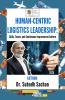
This book, Human-Centric Logistics Leadership: Skills, Teams, and Continuous Improvement Culture, has been written with a singular purpose-to place people back at the center of modern logistics thinking. While technology can optimize processes, only empowered, skilled, and motivated teams can sustain long-term operational excellence.
Across the nine chapters of this work, readers will find a structured and practical approach to understanding how leadership influences logistics outcomes. Beginning with the foundations of human-centric leadership, the book explores essential competencies such as communication, empathy, decision-making, and ethical responsibility-skills that enable leaders to build credibility and trust in high-pressure environments. It then moves deeper into the dynamics of teamwork, motivation, and empowerment, highlighting how resilient and collaborative teams become the backbone of high-performance supply chains.
A dedicated focus is placed on human factors in warehouse and transportation operations, acknowledging the physical, cognitive, and behavioral demands placed on frontline logistics workers. As logistics becomes increasingly digital, the importance of training, upskilling, and continuous learning is emphasized to ensure that the workforce remains future-ready and tech-confident.
The latter chapters guide readers through change leadership, operational disruption management, Kaizen culture building, and the evolving role of logistics leaders in a digitally augmented world. These sections blend real-world examples, best practices, and forward-looking insights to illustrate how leaders can build adaptable organizations rooted in continuous improvement and human-machine collaboration.
This book is intended for logistics professionals, supply chain managers, academicians, students, and leadership practitioners seeking a comprehensive understanding of human-centric logistics principles. Whether managing a warehouse, leading a transportation fleet, or overseeing enterprise-wide supply chain operations, readers will gain actionable strategies to strengthen workforce capability, enhance team cohesion, and foster a culture of learning and innovation.
In a world where efficiency is prized and uncertainty is inevitable, sustainable logistics excellence depends on how effectively leaders nurture their people. It is my hope that this book becomes a valuable guide for anyone striving to build logistics systems that are not only productive and agile but also deeply respectful of the human spirit that powers them.
Chapters
-
Foundations of Human-Centric Leadership in Modern Logistics
-
Core Leadership Skills for High-Performance Supply Chain Environments
-
Building Collaborative and Resilient Logistics Teams
-
Workforce Empowerment and Motivation Across Logistics Functions
-
Human Factors in Warehouse, Transportation, and Last-Mile Operations
-
Training, Upskilling, and Learning Pathways for Logistics Professionals
-
Leadership Approaches for Managing Change and Operational Disruptions
-
Cultivating Continuous Improvement and Kaizen-Driven Culture
-
The Future of Human-Centric Logistics Leadership in a Digitally Augmented World
Downloads
References
Chapter 1 – Foundations of Human-Centric Leadership in Modern Logistics
1. Goleman, D. (1998). Working with Emotional Intelligence. Bantam Books.
2. van Hoek, R., & Johnson, M. (2020). “Human Factors in Logistics and Supply Chain Management.” Journal of Business Logistics, 41(2), 131–135.
3. Christopher, M. (2016). Logistics & Supply Chain Management (5th ed.). Pearson.
Chapter 2 – Core Leadership Skills for High-Performance Supply Chain Environments
1. Sweeney, E. (2021). “Supply Chain Skills for the Future.” European Supply Chain Forum, 19(1), 45–52.
2. Hopp, W. J., & Spearman, M. (2011). Factory Physics (3rd ed.). Waveland Press.
3. Heizer, J., Render, B., & Munson, C. (2020). Operations Management. Pearson.
Chapter 3 – Building Collaborative and Resilient Logistics Teams
1. Liker, J. (2004). The Toyota Way: 14 Management Principles. McGraw-Hill.
2. Sutanto, E. M. (2017). “The Influence of Organizational Culture on Employee Performance.” International Journal of Scientific & Technology Research, 6(8), 1–7.
3. Holweg, M., Disney, S. M., Holmström, J., & Småros, J. (2005). “Supply Chain Collaboration.” International Journal of Logistics Management, 16(1), 5–21.
4. Psychology, 28(3), 301–311.
Chapter 4 – Workforce Empowerment and Motivation Across Logistics Functions
1. Deci, E. L., & Ryan, R. M. (2000). “Self-Determination Theory.” American Psychologist, 55(1), 68–78.
2. Hackman, J. & Oldham, G. (1976). “Motivation through the Design of Work.” Organizational Behavior and Human Performance, 16, 250–279.
3. Herzberg, F. (1966). Work and the Nature of Man. World Publishing.
Chapter 5 – Human Factors in Warehouse, Transportation, and Last-Mile Operations
1. Drury, C. G. (2018). “Human Factors in Logistics.” Applied Ergonomics, 70, 113–124.
2. Salvendy, G. (2012). Handbook of Human Factors and Ergonomics (4th ed.). Wiley.
3. Waters, D. (2019). Logistics: An Introduction to Supply Chain Management. Red Globe Press.
Chapter 6 – Training, Upskilling, and Learning Pathways for Logistics Professionals
1. World Economic Forum. (2020). The Future of Jobs Report.
2. Emerson, C., & Grimm, C. (2019). “Skills for Supply Chain Professionals.” Supply Chain Management Review, 23(5), 34–41.
3. Mentzer, J. T. (2004). Fundamentals of Supply Chain Management. SAGE.
Chapter 7 – Leadership Approaches for Managing Change and Operational Disruptions
1. Kotter, J. P. (1996). Leading Change. Harvard Business Review Press.
2. Burnes, B. (2017). Managing Change (7th ed.). Pearson.
3. Ivanov, D., Dolgui, A., & Sokolov, B. (2019). “Supply Chain Resilience.” International Journal of Production Research, 57(12), 829–846.
Chapter 8 – Cultivating a Continuous Improvement and Kaizen-Driven Culture
1. Imai, M. (1986). Kaizen: The Key to Japan’s Competitive Success. McGraw-Hill.
2. Liker, J., & Franz, J. (2011). The Toyota Way to Continuous Improvement. McGraw-Hill.
3. Ohno, T. (1988). Toyota Production System: Beyond Large-Scale Production. CRC Press.
Chapter 9 – The Future of Human-Centric Logistics Leadership in a Digitally Augmented World
1. Manyika, J. et al. (2017). A Future that Works: Automation, Employment, and Productivity. McKinsey Global Institute.
2. WEF (2022). Digital Transformation of Supply Chains. World Economic Forum.
3. Barreto, L., Amaral, A., & Pereira, T. (2017). “Industry 4.0 Implications in Logistics.” Procedia Manufacturing, 13, 1245–1252.
Published
Data Availability Statement
All data used in the preparation of this book are derived from publicly available sources, industry reports, academic literature, and organizational case studies. No proprietary, confidential, or personally identifiable data have been collected or used. Any datasets, frameworks, or models referenced in the book are appropriately cited and accessible through the original publishers or open-access platforms. Additional illustrative examples in the text are conceptual and do not involve real operational data. Therefore, no new datasets were generated or made available for this work.
License

This work is licensed under a Creative Commons Attribution 4.0 International License.
Creative Commons Attribution 4.0 International (CC BY 4.0) — License Terms
The Creative Commons Attribution 4.0 International License (CC BY 4.0) is one of the most permissive open licenses. It allows others to use, share, and build upon a work for any purpose—including commercial use—provided that proper credit is given to the original creator.
1. Permissions Granted
Under CC BY 4.0, anyone may:
a) Share
Copy and redistribute the material in any medium or format (print, digital, audio, video, etc.).
b) Adapt
Remix, transform, translate, or build upon the material.
c) Commercial Use Allowed
The work may be used for commercial purposes, including resale, inclusion in paid products, or monetized distribution.
d) No Additional Permission Required
Users do not need to contact the author for permission, as long as they follow the license conditions.
2. Attribution Requirements (Core Condition)
Users must give appropriate credit to the original creator. Attribution should include:
- Name of the author/creator
- Title of the work (if available)
- Source (publisher, website, or platform)
- Link to the original work (if online)
- Link to the CC BY 4.0 license
- Indication of any changes made
Example Attribution:
“Title of Work” by Author Name is licensed under CC BY 4.0.
Adapted from the original available at [URL].
3. Indicating Changes
If the material is modified, translated, shortened, or otherwise altered, users must clearly state that changes were made.
Examples:
- “Translated from the original”
- “Adapted from…”
- “Modified version of…”
4. No Additional Restrictions
Users may not:
- Apply legal terms or technological measures (such as DRM) that restrict others from exercising the license rights
- Impose new licensing conditions that contradict CC BY 4.0
5. Rights Not Covered by the License
CC BY 4.0 does not automatically grant:
- Patent rights
- Trademark rights
- Privacy or publicity rights
- Moral rights where they cannot be waived by law
Users must ensure compliance with these separately.
6. Disclaimer of Warranties
The material is provided “as-is.”
The licensor (author/publisher) gives no guarantees regarding accuracy, suitability, or fitness for any purpose.
7. Termination and Reinstatement
- The license remains valid as long as the terms are followed.
- If a user violates the terms (e.g., fails to attribute), the rights terminate automatically.
- Rights may be reinstated if the violation is corrected within 30 days of discovery.
8. International Scope
CC BY 4.0 is designed to work worldwide and is not limited to any specific country’s copyright law.
Suggested Copyright Notice Using CC BY 4.0
© [Year] [Author Name].
This work is licensed under the Creative Commons Attribution 4.0 International License (CC BY 4.0).
To view a copy of this license, visit: https://creativecommons.org/licenses/by/4.0/
You are free to share and adapt this work for any purpose, even commercially, provided that appropriate credit is given.









