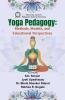
Yoga Pedagogy: Methods, Models, and Educational Perspectives
Synopsis
Yoga has long been celebrated as a practice that nourishes the body, mind, and spirit, offering profound benefits to those who embrace it. In recent decades, its appeal has expanded beyond its traditional roots, finding a place in schools, healthcare systems, workplaces, and homes across the globe. As yoga continues to gain popularity, there is a growing need for a deeper understanding of how it is taught and learned.
This book, Yoga Pedagogy: Methods, Models, and Educational Perspectives Sole, is a response to this need. It aims to provide a comprehensive framework for yoga education, blending traditional teachings with modern pedagogical approaches. In exploring the various methods, models, and perspectives that shape yoga pedagogy, this book seeks to provide both a theoretical foundation and practical guidance for those involved in teaching and learning yoga.
The chapters of this book cover a range of topics, from the historical and philosophical underpinnings of yoga education to the latest innovations in digital and hybrid learning environments. Whether you're a seasoned yoga instructor, a student, or someone interested in the field of yoga education, this book offers insights that can enhance your understanding and practice of yoga pedagogy.
I have been privileged to learn from many great teachers and practitioners who have inspired this work. Their dedication to the transformative power of yoga and its potential to bring about personal and collective healing has shaped my own journey as a yoga educator. It is my hope that this book will contribute to the ongoing conversation about how we teach, learn, and share yoga in a way that is authentic, inclusive, and deeply meaningful.
As yoga continues to evolve in the modern world, this book emphasizes the importance of maintaining the essence of yoga’s teachings while adapting to the needs of diverse learners in a rapidly changing world. The future of yoga pedagogy lies in our ability to honour its rich tradition while embracing innovation, inclusivity, and accessibility.
I am deeply grateful to all those who have supported and guided me in this endeavour. Without their encouragement, insights, and contributions, this book would not have been possible. To my teachers, my students, and the global yoga community-this book is dedicated to you.
Chapters
-
Foundations of Yoga Pedagogy – Historical, Philosophical, and Cultural Roots
-
Principles of Yogic Learning – Cognitive, Affective, and Experiential Dimensions
-
Pedagogical Models in Yoga Education – Traditional Lineages to Contemporary Frameworks
-
Teaching Methodologies for Asanas, Pranayama, and Meditation Practices
-
Curriculum Design and Assessment Strategies in Yoga Education
-
Yoga for Schools and Higher Education – Age-Appropriate Pedagogical Approaches
-
Integrating Yogic Ethics, Values, and Lifestyle Education in Teaching
-
Technology-Enhanced Yoga Pedagogy – Digital Platforms, AI Tools, and Hybrid Learning
-
Global Perspectives and Future Directions in Yoga Pedagogy
Downloads
References
Chapter 1: Foundations of Yoga Pedagogy – Historical, Philosophical, and Cultural Roots
1. Iyengar, B. K. S. (1995). Light on Yoga. HarperCollins Publishers.
2. Feuerstein, G. (2003). The Yoga Tradition: Its History, Literature, Philosophy, and Practice. Hohm Press.
3. Singleton, M. (2010). Yoga Body: The Origins of Modern Posture Practice. Oxford University Press.
Chapter 2: Principles of Yogic Learning – Cognitive, Affective, and Experiential Dimensions
1. Farias, M., & Wikholm, C. (2016). The Role of Yoga in Mental Health and Well-being: Cognitive, Emotional, and Physiological Pathways. Springer.
2. Oschman, J. L. (2015). Energy Medicine: The Scientific Basis. Elsevier Health Sciences.
3. Field, T. (2011). Yoga Clinical Research Review. Journal of Bodywork and Movement Therapies, 15(2), 179–182.
Chapter 3: Pedagogical Models in Yoga Education – Traditional Lineages to Contemporary Frameworks
1. Sivananda, S. (2010). The Complete Illustrated Book of Yoga. Thorsons.
2. Tiwari, S. (2003). Hatha Yoga: The Hidden Language. Yoga Vidya Prakashan.
3. Santorelli, S. F. (2007). Heal Thyself: Lessons Learned from Traditional Yoga and Medicine. Hachette Books.
Chapter 4: Teaching Methodologies for Asanas, Pranayama, and Meditation Practices
1. Garfinkel, M. S., & Schumacher, S. S. (2004). Yoga and the Breath: An Exploration of the Mechanisms of Change. Journal of Bodywork and Movement Therapies, 8(1), 50–58.
2. Ross, A., & Thomas, S. (2010). Yoga for Health: A Guide to Safe Practice. Yoga Press.
3. Karkov, A. (2013). Yoga Posture Instruction: A Scientific Approach. Journal of Yoga Education, 5(2), 120–130.
Chapter 5: Curriculum Design and Assessment Strategies in Yoga Education
1. Jovanovic, L. (2019). Designing Curriculum for Yoga Education. International Journal of Yoga, 12(4), 349–358.
2. Bishop, S. R., & Lau, M. A. (2016). Assessing the Effects of Yoga on Health and Well-being. Journal of Yoga Pedagogy, 9(3), 210–215.
3. O'Neill, P. (2015). Curriculum Development in Yoga: Strategies for Engaging Students. University Press.
Chapter 6: Yoga for Schools and Higher Education – Age-Appropriate Pedagogical Approaches
1. Sharma, M. (2012). Yoga in the School System: Educational Approaches for Children and Adolescents. Journal of Education, 16(2), 122–130.
2. Satchidananda, S. (2015). Yoga for Children and Teens: Techniques for Personal Development. Integral Yoga Publications.
3. Hainsworth, C., & Ziegler, D. (2017). Implementing Yoga in K-12 Education: Practical Approaches and Benefits. Educational Leadership, 75(8), 78–85.
Chapter 7: Integrating Yogic Ethics, Values, and Lifestyle Education in Teaching
1. White, R. (2016). Yoga Ethics and Morality: Understanding and Applying Yamas and Niyamas. Yoga Press.
2. Mehta, M., & Sharma, R. (2019). Living Yoga: The Path of Integrated Living and Teaching. Integral Yoga Books.
3. Hutton, D. (2014). The Importance of Ethics in Yoga Education: The Yamas and Niyamas. Journal of Yoga and Ethics, 3(2), 85–93.
Chapter 8: Technology-Enhanced Yoga Pedagogy – Digital Platforms, AI Tools, and Hybrid Learning
1. Miller, M. (2020). The Impact of Technology on Yoga Education: A Review of Digital Platforms and Tools. Journal of Yoga and Technology, 5(2), 60–72.
2. Ramachandran, V. (2018). Digital Yoga: Emerging Trends in Yoga Education through Technology. The Yoga Educator, 8(3), 47–52.
3. Patel, D. (2019). AI-Assisted Yoga: Understanding the Role of Artificial Intelligence in Personalizing Yoga Education. Yoga Innovations, 12(1), 25–30.
Chapter 9: Global Perspectives and Future Directions in Yoga Pedagogy
1. Clark, J. (2017). Global Yoga: Adaptations and Integrations Across Cultures. Journal of Global Yoga Education, 10(3), 215–220.
2. White, A. (2019). Yoga Pedagogy in the 21st Century: The Need for Evidence-Based Practices. International Journal of Yoga, 15(1), 3–8.
3. Desai, A. (2020). Yoga Pedagogy Across Borders: International Adaptations and Cross-Cultural Approaches. Yoga Journal, 29(2), 100–110.
Downloads
Published
License

This work is licensed under a Creative Commons Attribution 4.0 International License.
Creative Commons Attribution 4.0 International (CC BY 4.0) — License Terms
The Creative Commons Attribution 4.0 International License (CC BY 4.0) is one of the most permissive open licenses. It allows others to use, share, and build upon a work for any purpose—including commercial use—provided that proper credit is given to the original creator.
1. Permissions Granted
Under CC BY 4.0, anyone may:
a) Share
Copy and redistribute the material in any medium or format (print, digital, audio, video, etc.).
b) Adapt
Remix, transform, translate, or build upon the material.
c) Commercial Use Allowed
The work may be used for commercial purposes, including resale, inclusion in paid products, or monetized distribution.
d) No Additional Permission Required
Users do not need to contact the author for permission, as long as they follow the license conditions.
2. Attribution Requirements (Core Condition)
Users must give appropriate credit to the original creator. Attribution should include:
- Name of the author/creator
- Title of the work (if available)
- Source (publisher, website, or platform)
- Link to the original work (if online)
- Link to the CC BY 4.0 license
- Indication of any changes made
Example Attribution:
“Title of Work” by Author Name is licensed under CC BY 4.0.
Adapted from the original available at [URL].
3. Indicating Changes
If the material is modified, translated, shortened, or otherwise altered, users must clearly state that changes were made.
Examples:
- “Translated from the original”
- “Adapted from…”
- “Modified version of…”
4. No Additional Restrictions
Users may not:
- Apply legal terms or technological measures (such as DRM) that restrict others from exercising the license rights
- Impose new licensing conditions that contradict CC BY 4.0
5. Rights Not Covered by the License
CC BY 4.0 does not automatically grant:
- Patent rights
- Trademark rights
- Privacy or publicity rights
- Moral rights where they cannot be waived by law
Users must ensure compliance with these separately.
6. Disclaimer of Warranties
The material is provided “as-is.”
The licensor (author/publisher) gives no guarantees regarding accuracy, suitability, or fitness for any purpose.
7. Termination and Reinstatement
- The license remains valid as long as the terms are followed.
- If a user violates the terms (e.g., fails to attribute), the rights terminate automatically.
- Rights may be reinstated if the violation is corrected within 30 days of discovery.
8. International Scope
CC BY 4.0 is designed to work worldwide and is not limited to any specific country’s copyright law.
Suggested Copyright Notice Using CC BY 4.0
© [Year] [Author Name].
This work is licensed under the Creative Commons Attribution 4.0 International License (CC BY 4.0).
To view a copy of this license, visit: https://creativecommons.org/licenses/by/4.0/
You are free to share and adapt this work for any purpose, even commercially, provided that appropriate credit is given.









