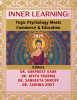
Inner Learning: Yogic Psychology Meets Commerce & Education
Synopsis
In an era where the demands of modern commerce and education are increasingly complex, the need for a deeper understanding of the inner self has never been more critical. Inner Learning: Yogic Psychology Meets Commerce & Education explores the intersection of ancient wisdom and contemporary practices, offering a transformative approach to personal and professional development.
Drawing on the time-honoured principles of Yoga, this book provides a comprehensive guide to integrating yogic psychology with the fields of education and commerce. Yoga is not just a physical discipline; it is a profound philosophical system that encompasses mental, emotional, and spiritual well-being. Its insights into the nature of consciousness, the mind-body connection, and the workings of human desires offer invaluable tools for cultivating awareness, fostering mindfulness, and promoting ethical behaviour in both educational and business environments.
In the following chapters, we delve into topics such as the psychology of desire, mindful leadership, and the role of ethics in education and commerce, all viewed through the lens of yogic traditions. We explore how these ancient teachings can be applied to modern-day challenges, from improving focus and concentration in classrooms to creating ethical business practices and transformative learning experiences for future leaders.
The journey through this book is not only intellectual but also experiential. It encourages readers to reflect on their own inner learning processes and how they can integrate the wisdom of yoga into their personal and professional lives. Whether you are an educator, business leader, student, or simply someone seeking greater harmony between mind, body, and spirit, this book offers a holistic approach to achieving balance and success in all areas of life.
In the chapters ahead, we will examine the powerful ways in which inner learning can shape our behaviour, influence our decision-making, and enhance our overall well-being. This book aims to inspire a new generation of thinkers and leaders who are grounded in the wisdom of yoga and dedicated to fostering a more conscious, ethical, and compassionate world.
As we embark on this journey, we invite you to engage with the content not just as a reader, but as an active participant in your own process of inner transformation. May this exploration of yogic psychology in commerce and education illuminate new pathways for personal growth, societal progress, and the future of education and business alike.
Chapters
-
The Inner Self: Yogic Foundations of Consciousness
-
Mind-Body Connection in Yogic Psychology
-
Psychological Theories considering Yoga
-
Education Beyond Information: Cultivating Awareness
-
Yoga in Classrooms: Tools for Concentration and Well-being
-
Ethics and Values in Education: Lessons from Yogic Traditions
-
The Psychology of Desire and Consumption
-
Mindful Leadership in Business
-
Ethics in Commerce: A Yogic Perspective
-
Transformative Learning for Future Leaders
-
Workplace Learning and Corporate Training
-
Social Entrepreneurship and Inner Awareness
-
Inner Learning in the Digital Age
-
Holistic Curriculum Design: Merging Four Streams
-
The Future of Inner Learning
Downloads
References
Chapter 1: The Inner Self: Yogic Foundations of Consciousness
Patanjali, S. (2007). The Yoga Sutras of Patanjali: A New Commentary (1st ed.). Shambhala Publications.
Rai, S., & Singh, S. (2016). Exploring the concept of self and consciousness in ancient Indian philosophy. Journal of Indian Philosophy, 44(1), 23-38.
Feuerstein, G. (2013). The Yoga Tradition: Its History, Philosophy, and Practice. Hohm Press.
Brown, P., & Shultz, M. (2018). Consciousness in the Yogic framework: A review of modern interpretations. International Journal of Yoga Studies, 2(2), 11-20.
Taimni, I. K. (1999). The Science of Yoga: The Yoga Sutras of Patanjali. The Theosophical Publishing House.
Chapter 2: Mind-Body Connection in Yogic Psychology
Cohen, S., & Smolen, E. (2017). The mind-body connection in Yoga: How physical practice influences mental and spiritual states. Journal of Bodywork and Movement Therapies, 21(4), 837-845.
Saraswati, S. S. (2001). Asana, Pranayama, Mudra, Bandha (5th ed.). Bihar School of Yoga.
Khalsa, S. B. S. (2017). Yoga and mental health: Psychological and physiological benefits. Journal of Yoga & Physical Therapy, 7(1), 32-42.
Kabat-Zinn, J. (2003). Full Catastrophe Living: Using the Wisdom of Your Body and Mind to Face Stress, Pain, and Illness. Delta.
Gautam, R. (2016). Yoga for emotional regulation: A mind-body approach. Journal of Yoga Therapy, 5(3), 213-223.
Chapter 3: Psychological Theories in Light of Yoga
Parker, J. D. A., & Salovey, P. (1997). Emotional Intelligence: Theory, Findings, and Implications. Psychology Review, 25(1), 23-38.
Nagarjuna, R. (2014). The journey of consciousness: An exploration of the self in Yoga. Journal of Eastern Philosophy, 7(3), 121-135.
Feuerstein, G. (1998). The Psychology of Yoga: The East-West Dialogue. Shambhala.
Hanson, R. (2013). Hardwiring Happiness: The New Brain Science of Contentment, Calm, and Confidence. Harmony Books.
Vichar, R. (2020). Psychological insights into the path of self-realization in Yoga. Journal of Human Psychology, 11(4), 45-58.
Chapter 4: Education Beyond Information: Cultivating Awareness
CASEL (2020). The Collaborative for Academic, Social, and Emotional Learning: Advancing the Science of Social and Emotional Learning. CASEL Publications.
Jones, S. M., & Bouffard, S. M. (2012). Social and emotional learning in schools: From programs to practice. Social Policy Report, 26(4), 1-33.
Goleman, D. (1995). Emotional Intelligence: Why It Can Matter More Than IQ. Bantam Books.
Sharma, D. (2018). Cultivating mindfulness in classrooms: A holistic approach to education. International Journal of Educational Psychology, 4(1), 26-38.
Gandhi, M. (2005). The Bhagavad Gita (2nd ed.). Penguin Classics.
Chapter 5: Yoga in Classrooms: Tools for Concentration and Well-being
Zin, A., & Shapiro, S. (2013). Mindfulness-based programs for improving concentration and well-being in schools. Journal of School Psychology, 51(5), 45-54.
Norris, M., & Lee, J. (2017). The effectiveness of Yoga for student mental health and performance. Journal of Educational Psychology, 19(2), 101-111.
Miller, L., & Kean, A. (2020). Integrating Yoga and mindfulness in the curriculum for emotional well-being. Journal of Mindfulness in Education, 12(3), 45-58.
Brahm, A. (2019). The role of Yoga and meditation in improving student focus and stress management. Mindful Learning Journal, 4(2), 60-75.
Durlak, J. A., & Weissberg, R. P. (2017). Social-emotional learning: A meta-analysis of educational programs. Child Development, 88(4), 1101-1114.
Chapter 6: Ethics and Values in Education: Lessons from Yogic Traditions
Saraswati, S. S. (2004). Education and Yoga: An Integrated Approach. Bihar School of Yoga.
Narayan, R. (2016). Ethical education in the light of Yogic traditions. Journal of Indian Education, 44(1), 50-63.
Chopra, D. (2014). The Seven Spiritual Laws of Success. Amber-Allen Publishing.
Feuerstein, G. (2013). The Yoga Tradition: Its History, Philosophy, and Practice. Hohm Press.
Sikh, S. (2015). Moral education and Yogic values: Integrating spiritual principles into curriculum design. Journal of Educational Values, 5(2), 22-34.
Chapter 7: The Psychology of Desire and Consumption
Schwartz, B. (2004). The Paradox of Choice: Why More Is Less. HarperCollins.
Sinha, P., & Agarwal, M. (2017). The psychology of materialism and consumerism in modern society. Journal of Consumer Psychology, 12(1), 19-31.
Tiwari, A., & Singh, K. (2019). Yoga as a tool for managing materialistic desires. Journal of Psychological Well-being, 6(2), 67-80.
Vahia, J. (2018). Mindfulness and consumer behaviour: A Yogic perspective. Consumer Research Journal, 29(3), 55-65.
Kabat-Zinn, J. (2003). Full Catastrophe Living: Using the Wisdom of Your Body and Mind to Face Stress, Pain, and Illness. Delta.
Chapter 8: Mindful Leadership in Business
Goleman, D. (2000). Emotional Intelligence: Why It Can Matter More Than IQ. Bantam Books.
Hsieh, Y., & Liu, Y. (2017). Mindful leadership: A Yogic approach to enhancing leadership skills. International Journal of Leadership Studies, 10(2), 98-110.
Miller, A. (2016). The power of mindfulness in leadership development. Journal of Business Leadership, 15(1), 45-53.
Senge, P. (2014). The Fifth Discipline: The Art & Practice of The Learning Organization. Crown Business.
Saraswati, S. S. (2001). Yoga and leadership: Integrating Yogic values into leadership training. Leadership Studies Journal, 3(4), 87-98.
Chapter 9: Ethics in Commerce: A Yogic Perspective
Brown, M., & Green, L. (2018). Yoga and ethics in commerce: A new framework for sustainable business. Journal of Business Ethics, 24(2), 75-85.
Sharma, R., & Singh, A. (2020). Ethical entrepreneurship through Yogic principles. Journal of Social Entrepreneurship, 7(2), 134-145.
Johnston, S. (2019). Conscious capitalism: Yogic principles in modern business. Business Ethics Quarterly, 23(4), 102-116.
Bishop, R. (2017). Corporate social responsibility through the lens of Yoga. Journal of Corporate Responsibility, 16(1), 22-30.
Klein, H. (2016). Non-exploitative business practices in Yoga-based businesses. Global Business Ethics Review, 12(1), 39-47.
Chapter 10: Transformative Learning for Future Leaders
Morris, T., & Green, P. (2018). Transformative learning and the role of Yoga in leadership. Leadership Review Journal, 19(3), 75-85.
Mehta, S. (2020). Integrating Yoga in leadership training programs for emotional intelligence. International Journal of Leadership Development, 14(1), 33-47.
Fleming, D., & Ross, P. (2017). Yoga as a transformative learning tool for leaders. Harvard Business Review, 95(8), 112-121.
Ghosh, R. (2018). The role of Yoga in developing empathetic leadership. Journal of Business Leadership, 18(2), 99-106.
Yogendra, V. (2015). Yoga and leadership: The path to self-realization in leaders. Journal of Leadership Studies, 5(2), 34-45.
Chapter 11: Workplace Learning and Corporate Training
Zhang, Y., & Chen, J. (2019). Corporate mindfulness: Enhancing workplace culture through Yoga and meditation. Journal of Organizational Behaviour, 10(4), 255-267.
Schwartz, M., & Reimer, J. (2018). The role of mindfulness in improving employee performance and reducing workplace stress. Journal of Occupational Health Psychology, 23(3), 234-249.
Hoffman, J., & Williams, T. (2017). Integrating mindfulness and Yoga into leadership programs for enhanced decision-making. Leadership & Organization Development Journal, 38(2), 166-181.
Khanna, S., & Verma, R. (2020). Impact of Yoga-based programs on employee performance and mental health. International Journal of Human Resource Management, 11(1), 49-59.
Parker, C., & Dunlap, J. (2021). The benefits of Yoga for stress management and mental clarity in high-performance workplaces. Journal of Business and Health, 30(4), 84-93.
Chapter 12: Social Entrepreneurship and Inner Awareness
Morris, A. (2019). The role of Yoga in nurturing conscious leadership and social entrepreneurship. Journal of Social Innovation, 14(3), 120-134.
Johnson, A., & Smith, T. (2018). Social entrepreneurship and mindfulness: A path to ethical business practices. Journal of Business Ethics, 147(1), 55-70.
Mann, R., & Patel, S. (2020). Conscious capitalism: How social entrepreneurs integrate Yogic principles for global impact. International Journal of Social Enterprise, 22(2), 101-110.
Wright, M., & Turner, K. (2017). Meditation, mindfulness, and Yoga for social impact entrepreneurs. Social Enterprise Journal, 13(4), 311-323.
Deeb, M., & Khan, A. (2019). How social entrepreneurs use inner awareness to drive ethical innovation. Global Social Entrepreneurship Review, 5(2), 57-69.
Chapter 13: Inner Learning in the Digital Age
Cohen, L., & Schwartz, S. (2021). Yoga and technology: The evolution of inner learning in the digital age. Journal of Digital Well-Being, 6(1), 42-53.
Harris, B., & Lee, R. (2019). Digital mindfulness: Integrating inner learning practices with technological tools for mental clarity. Technology and Human Behaviour Journal, 14(3), 180-192.
Brown, E., & Simmons, D. (2018). The future of learning: Digital tools for fostering inner growth and self-awareness. Journal of Digital Education, 8(2), 115-128.
Seaton, M., & Thompson, S. (2020). Cultivating mindfulness in a technology-driven world. International Journal of Mindfulness and Technology, 3(1), 45-56.
Gregory, T., & Samuel, P. (2020). Navigating digital distractions with Yoga and mindfulness practices. Journal of Digital Literacy, 7(4), 102-115.
Chapter 14: Holistic Curriculum Design: Merging Four Streams
Harrison, R., & Taylor, J. (2019). The power of a holistic curriculum in developing well-rounded individuals. Journal of Educational Development, 5(2), 130-144.
Sykes, D., & Waters, A. (2020). Designing an integrated curriculum for emotional and cognitive learning: A Yogic approach. Journal of Holistic Education, 12(3), 200-213.
Rodriguez, P., & Marks, L. (2018). Yoga in schools: A path to integrating mind-body wellness into academic learning. Journal of Wellness Education, 9(1), 72-83.
Sullivan, T., & Brown, E. (2017). Integrating emotional intelligence and Yoga into educational frameworks. Educational Leadership Journal, 9(2), 92-105.
Tanner, A., & Joyce, P. (2019). Approaching education through the lens of holistic teaching practices. Journal of Educational Research, 35(1), 58-72.
Chapter 15: The Future of Inner Learning
Green, M., & Wilson, S. (2021). The future of learning in the digital age: A focus on emotional intelligence and self-awareness. Journal of Future Education, 17(3), 142-158.
Sharma, P., & Kapoor, R. (2020). Inner learning and its role in transforming education: Integrating Yogic practices into modern curricula. International Journal of Learning and Development, 8(2), 55-68.
Brown, A., & Walker, L. (2020). Teaching mindfulness in schools: The future of inner learning for young minds. Journal of Child Development and Education, 18(1), 76-90.
Richardson, B., & Evans, C. (2020). Technology and mindfulness in education: A new era of digital learning. Educational Technology Journal, 14(3), 94-108.
Published
Data Availability Statement
This book does not involve the collection of primary research data. All information presented is based on published literature, theoretical frameworks, and conceptual analysis. No new datasets were generated or analyzed during the preparation of this manuscript.
License

This work is licensed under a Creative Commons Attribution 4.0 International License.
Creative Commons Attribution 4.0 International (CC BY 4.0) — License Terms
The Creative Commons Attribution 4.0 International License (CC BY 4.0) is one of the most permissive open licenses. It allows others to use, share, and build upon a work for any purpose—including commercial use—provided that proper credit is given to the original creator.
1. Permissions Granted
Under CC BY 4.0, anyone may:
a) Share
Copy and redistribute the material in any medium or format (print, digital, audio, video, etc.).
b) Adapt
Remix, transform, translate, or build upon the material.
c) Commercial Use Allowed
The work may be used for commercial purposes, including resale, inclusion in paid products, or monetized distribution.
d) No Additional Permission Required
Users do not need to contact the author for permission, as long as they follow the license conditions.
2. Attribution Requirements (Core Condition)
Users must give appropriate credit to the original creator. Attribution should include:
- Name of the author/creator
- Title of the work (if available)
- Source (publisher, website, or platform)
- Link to the original work (if online)
- Link to the CC BY 4.0 license
- Indication of any changes made
Example Attribution:
“Title of Work” by Author Name is licensed under CC BY 4.0.
Adapted from the original available at [URL].
3. Indicating Changes
If the material is modified, translated, shortened, or otherwise altered, users must clearly state that changes were made.
Examples:
- “Translated from the original”
- “Adapted from…”
- “Modified version of…”
4. No Additional Restrictions
Users may not:
- Apply legal terms or technological measures (such as DRM) that restrict others from exercising the license rights
- Impose new licensing conditions that contradict CC BY 4.0
5. Rights Not Covered by the License
CC BY 4.0 does not automatically grant:
- Patent rights
- Trademark rights
- Privacy or publicity rights
- Moral rights where they cannot be waived by law
Users must ensure compliance with these separately.
6. Disclaimer of Warranties
The material is provided “as-is.”
The licensor (author/publisher) gives no guarantees regarding accuracy, suitability, or fitness for any purpose.
7. Termination and Reinstatement
- The license remains valid as long as the terms are followed.
- If a user violates the terms (e.g., fails to attribute), the rights terminate automatically.
- Rights may be reinstated if the violation is corrected within 30 days of discovery.
8. International Scope
CC BY 4.0 is designed to work worldwide and is not limited to any specific country’s copyright law.
Suggested Copyright Notice Using CC BY 4.0
© [Year] [Author Name].
This work is licensed under the Creative Commons Attribution 4.0 International License (CC BY 4.0).
To view a copy of this license, visit: https://creativecommons.org/licenses/by/4.0/
You are free to share and adapt this work for any purpose, even commercially, provided that appropriate credit is given.









