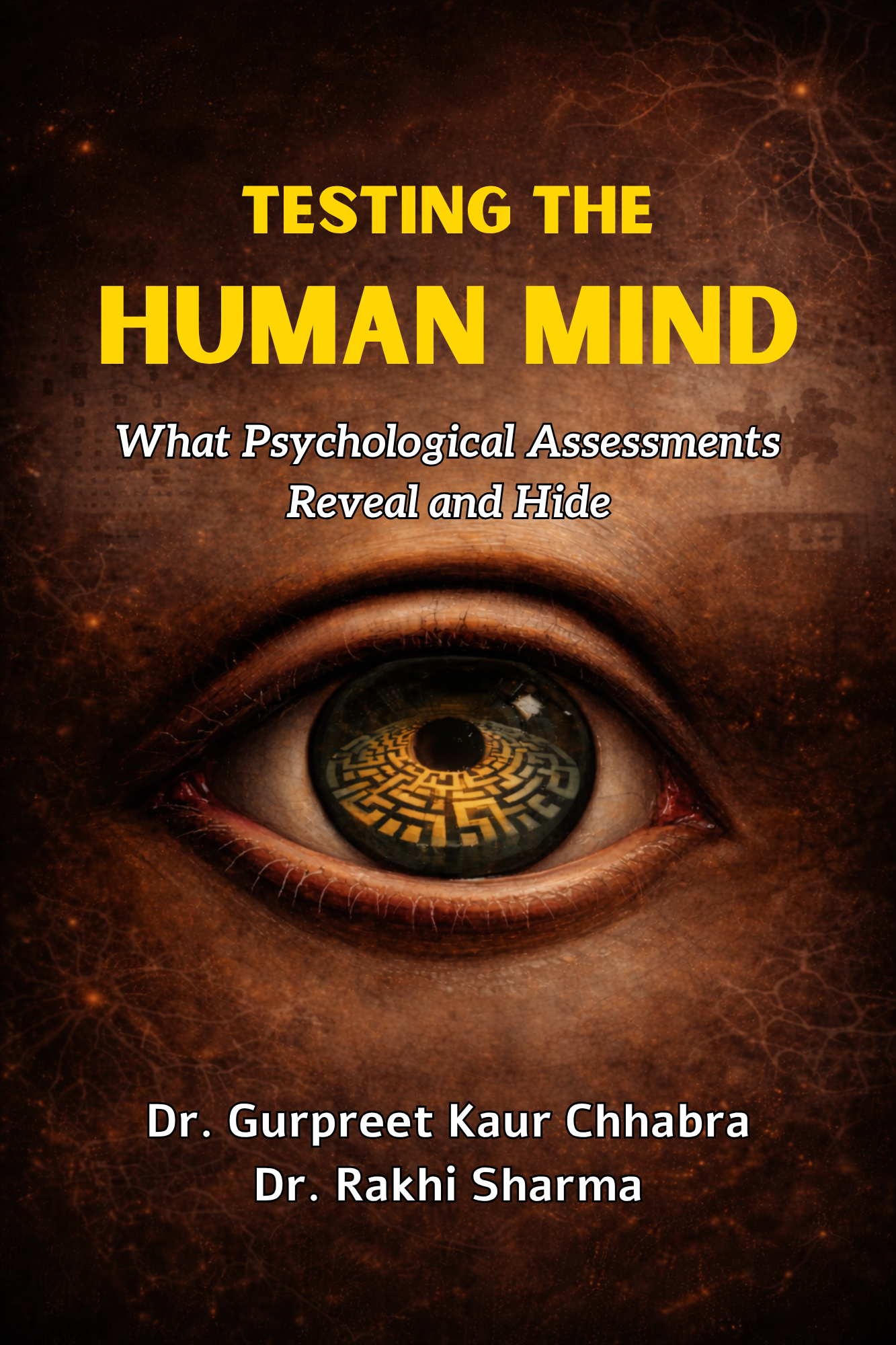
Testing the Human Mind: What Psychological Assessments Reveal-and Hide
Keywords:
Psychological Assessment, Psychometric Testing, Cognitive Evaluation, Wissira Press, Books by Wissira, Wissira Research LabSynopsis
Understanding the human mind has long been one of humanity’s most compelling pursuits. From ancient reflections on character and temperament to modern scientific efforts to quantify cognition and emotion, people have sought ways to explain why we think, feel, and behave as we do. Psychological assessments represent one of the most influential tools developed in this quest. They promise objectivity, clarity, and measurable insight into mental processes that are otherwise invisible. Yet alongside their power lies a paradox: what these tests reveal can be illuminating, but what they overlook may be equally significant.
This book, Testing the Human Mind: What Psychological Assessments Reveal-and Hide, was written to explore that paradox. Psychological tests shape decisions that affect education, employment, healthcare, legal outcomes, and personal identity. A single score may determine whether a child receives special support, whether an applicant is hired, or whether a patient receives treatment. Such influence demands careful scrutiny. Are these instruments truly capturing the essence of human ability and personality, or are they approximations shaped by cultural assumptions, methodological limits, and practical constraints?
The chapters that follow examine psychological assessment from multiple perspectives-historical, theoretical, clinical, educational, organizational, and ethical. Rather than presenting tests as either flawless scientific achievements or fundamentally flawed tools, this book aims to offer a balanced view. Assessments can provide valuable information when used responsibly, but they cannot replace nuanced understanding of individual lives. Human beings are more than data points; context, experience, motivation, and meaning play roles that no standardized instrument can fully measure.
Another goal of this book is accessibility. Psychological testing is often discussed in technical language that can be difficult for non-specialists to understand. While grounded in established research and professional practice, this text is written to be approachable for students, educators, practitioners, policymakers, and general readers alike. It explains key concepts without assuming prior expertise, while still addressing the complexities and controversies that define the field.
Particular attention is given to issues of fairness and inclusivity. Assessments developed within one cultural or linguistic environment may not translate seamlessly into another. Socioeconomic differences, educational opportunities, and lived experiences can influence performance in ways that are unrelated to the traits being measured. Recognizing these influences is essential for ethical practice and for avoiding harmful misinterpretations.
The book also looks forward. Advances in neuroscience, digital technology, and artificial intelligence are reshaping how psychological data are collected and analysed. Adaptive testing platforms, wearable devices, and large-scale behavioural datasets promise unprecedented precision, but they also raise questions about privacy, consent, and algorithmic bias. As measurement tools become more sophisticated, society must consider not only what can be measured but what should be measured-and how results should be used.
Ultimately, this work invites readers to think critically about the role of psychological assessments in modern life. Tests can open doors to understanding, support, and opportunity, but they can also narrow perspectives if treated as definitive judgments. The human mind is dynamic, multifaceted, and deeply influenced by context. No instrument, however advanced, can fully capture its richness.
If this book encourages readers to view assessment results not as final verdicts but as starting points for deeper inquiry, it will have achieved its purpose. The hope is that professionals will apply these tools more thoughtfully, institutions will use them more responsibly, and individuals will interpret them with greater awareness of both their strengths and their limitations.
Chapters
-
Chapter-1 The Origins of Psychological Testing
-
Chapter-2 Understanding Intelligence: Beyond IQ
-
Chapter-3 Personality Tests: Mapping the Inner Self
-
Chapter-4 Clinical Assessments and Mental Health Diagnosis
-
Chapter-5 Neuropsychological Testing and Brain Function
-
Chapter-6 Testing in Education: Measuring Learning and Potential
-
Chapter-7 Workplace and Organizational Assessments
-
Chapter-8 Cultural Bias, Fairness, and Ethical Dilemmas
-
Chapter-9 The Limits of Measurement: What Tests Cannot Capture
Downloads
References
Boring, E. G. (1950). A History of Experimental Psychology. Prentice Hall.
Fancher, R. E., & Rutherford, A. (2017). Pioneers of Psychology (5th ed.). W. W. Norton.
Gould, S. J. (1996). The Mismeasure of Man (Revised ed.). W. W. Norton.
Sternberg, R. J. (1985). Beyond IQ: A Triarchic Theory of Human Intelligence. Cambridge University Press.
Gardner, H. (2011). Frames of Mind: The Theory of Multiple Intelligences (Updated ed.). Basic Books.
Goleman, D. (1995). Emotional Intelligence. Bantam Books.
Costa, P. T., & McCrae, R. R. (1992). Revised NEO Personality Inventory (NEO-PI-R) Manual. Psychological Assessment Resources.
John, O. P., & Srivastava, S. (1999). The Big Five trait taxonomy. In L. Pervin & O. John (Eds.), Handbook of Personality. Guilford Press.
Jung, C. G. (1971). Psychological Types. Princeton University Press.
American Psychiatric Association. (2022). Diagnostic and Statistical Manual of Mental Disorders (DSM-5-TR). APA Publishing.
Groth-Marnat, G., & Wright, A. J. (2016). Handbook of Psychological Assessment (6th ed.). Wiley.
Kaplan, R. M., & Saccuzzo, D. P. (2017). Psychological Testing: Principles, Applications, and Issues (9th ed.). Cengage.
Lezak, M. D., et al. (2012). Neuropsychological Assessment (5th ed.). Oxford University Press.
Kolb, B., & Whishaw, I. Q. (2021). Fundamentals of Human Neuropsychology (8th ed.). Worth Publishers.
Strauss, E., Sherman, E. M. S., & Spreen, O. (2006). A Compendium of Neuropsychological Tests. Oxford University Press.
Linn, R. L., & Gronlund, N. E. (2000). Measurement and Assessment in Teaching (8th ed.). Prentice Hall.
Popham, W. J. (2017). Classroom Assessment: What Teachers Need to Know (8th ed.). Pearson.
Salvia, J., & Ysseldyke, J. (2007). Assessment in Special and Inclusive Education. Houghton Mifflin.
Muchinsky, P. M. (2012). Psychology Applied to Work (10th ed.). Hypergraphic Press.
Schmidt, F. L., & Hunter, J. E. (1998). Validity of selection methods. Psychological Bulletin, 124(2), 262–274.
Hogan, R., & Kaiser, R. B. (2005). What we know about leadership. Review of General Psychology, 9(2), 169–180.
Helms, J. E. (1992). Why is there no study of cultural equivalence? American Psychologist, 47(9), 1083–1101.
Suzuki, L. A., & Ponterotto, J. G. (2008). Handbook of Multicultural Assessment (3rd ed.). Jossey-Bass.
American Educational Research Association, APA, & NCME. (2014). Standards for Educational and Psychological Testing.
Kahneman, D. (2011). Thinking, Fast and Slow. Farrar, Straus and Giroux.
Nisbett, R. E. (2009). Intelligence and How to Get It. W. W. Norton.
Csikszentmihalyi, M. (1996). Creativity: Flow and the Psychology of Discovery and Invention. HarperCollins.
Published
License

This work is licensed under a Creative Commons Attribution 4.0 International License.
Creative Commons Attribution 4.0 International (CC BY 4.0) — License Terms
The Creative Commons Attribution 4.0 International License (CC BY 4.0) is one of the most permissive open licenses. It allows others to use, share, and build upon a work for any purpose—including commercial use—provided that proper credit is given to the original creator.
1. Permissions Granted
Under CC BY 4.0, anyone may:
a) Share
Copy and redistribute the material in any medium or format (print, digital, audio, video, etc.).
b) Adapt
Remix, transform, translate, or build upon the material.
c) Commercial Use Allowed
The work may be used for commercial purposes, including resale, inclusion in paid products, or monetized distribution.
d) No Additional Permission Required
Users do not need to contact the author for permission, as long as they follow the license conditions.
2. Attribution Requirements (Core Condition)
Users must give appropriate credit to the original creator. Attribution should include:
- Name of the author/creator
- Title of the work (if available)
- Source (publisher, website, or platform)
- Link to the original work (if online)
- Link to the CC BY 4.0 license
- Indication of any changes made
Example Attribution:
“Title of Work” by Author Name is licensed under CC BY 4.0.
Adapted from the original available at [URL].
3. Indicating Changes
If the material is modified, translated, shortened, or otherwise altered, users must clearly state that changes were made.
Examples:
- “Translated from the original”
- “Adapted from…”
- “Modified version of…”
4. No Additional Restrictions
Users may not:
- Apply legal terms or technological measures (such as DRM) that restrict others from exercising the license rights
- Impose new licensing conditions that contradict CC BY 4.0
5. Rights Not Covered by the License
CC BY 4.0 does not automatically grant:
- Patent rights
- Trademark rights
- Privacy or publicity rights
- Moral rights where they cannot be waived by law
Users must ensure compliance with these separately.
6. Disclaimer of Warranties
The material is provided “as-is.”
The licensor (author/publisher) gives no guarantees regarding accuracy, suitability, or fitness for any purpose.
7. Termination and Reinstatement
- The license remains valid as long as the terms are followed.
- If a user violates the terms (e.g., fails to attribute), the rights terminate automatically.
- Rights may be reinstated if the violation is corrected within 30 days of discovery.
8. International Scope
CC BY 4.0 is designed to work worldwide and is not limited to any specific country’s copyright law.
Suggested Copyright Notice Using CC BY 4.0
© [Year] [Author Name].
This work is licensed under the Creative Commons Attribution 4.0 International License (CC BY 4.0).
To view a copy of this license, visit: https://creativecommons.org/licenses/by/4.0/
You are free to share and adapt this work for any purpose, even commercially, provided that appropriate credit is given.









