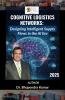
Cognitive Logistics Networks: Designing Intelligent Supply Flows in the AI Era
Synopsis
The rapid evolution of artificial intelligence is redefining every aspect of global supply chains-from the way data is collected and analysed to how decisions are made and operations are executed. As logistics networks become increasingly interconnected and complex, traditional systems are no longer sufficient to manage rising consumer expectations, real-time disruptions, and the scale of global trade. This shift has given rise to a new paradigm: cognitive logistics.
This book, Cognitive Logistics Networks: Designing Intelligent Supply Flows in the AI Era, was written to explore this transformative era, where smart technologies and human expertise converge to create supply chains that learn, adapt, and optimize themselves. The goal of this book is to provide readers with a clear, comprehensive understanding of how AI, machine learning, robotics, IoT, decision intelligence, and autonomous systems are revolutionizing modern logistics.
Throughout the chapters, I have integrated insights from academia, industry, and field-level innovation to present a balanced and practical perspective. The topics covered reflect the major forces shaping the future of logistics-from predictive demand sensing and real-time visibility to self-learning routing engines, autonomous warehousing, cognitive risk management, and ethical considerations for AI-driven networks. The book also emphasizes the evolving role of human expertise in an increasingly automated world, highlighting the importance of collaboration, ethical governance, and continuous learning.
One of the central motivations behind this work is the need to bridge the gap between technological potential and operational reality. Many organizations today grapple with implementing AI effectively across their supply chains. This book attempts to simplify complex concepts and present them in a structured, actionable format that leaders, engineers, researchers, and students can apply in practical scenarios.
I have also included case studies, real-world examples, tools, datasets, and frameworks to help readers understand not only what cognitive logistics is, but how it can be implemented responsibly and sustainably. The Appendix extends this effort by providing a curated set of resources for those who wish to explore these innovations further.
As we move deeper into the AI-driven era, supply chains will continue to evolve into intelligent ecosystems capable of anticipating challenges before they arise, coordinating their own operations, and supporting global resilience. I hope this book serves as a meaningful contribution to that journey-offering insights that inspire innovation, encourage thoughtful adoption of AI, and spark new ideas for building the next generation of logistics networks.
I extend my sincere gratitude to the readers, practitioners, and learners who engage with this work. Your pursuit of knowledge and excellence is what drives the ongoing evolution of this field. May this book support your efforts to design smarter, safer, and more responsive supply chains for the world ahead.
Chapters
-
Foundations of Cognitive Logistics in the AI-Driven Supply Chain
-
Intelligent Demand Sensing and Predictive Fulfilment Engines
-
Real-Time Visibility Platforms and Autonomous Flow Optimization
-
Designing Self-Learning Transportation and Routing Systems
-
AI-Empowered Warehousing: Smart Storage, Robotics, and Flow Automation
-
Decision Intelligence Architectures for End-to-End Supply Flow Control
-
Leadership Approaches for Managing Change and Operational Disruptions
-
Cultivating a Continuous Improvement and Kaizen-Driven Culture
-
The Future of Cognitive Logistics: Human-AI Collaboration and Ethical Network Design
Downloads
References
Chapter 1: Foundations of Cognitive Logistics in the AI-Driven Supply Chain
1. Christopher, M. (2016). Logistics & supply chain management (5th ed.). Pearson Education Limited.
2. Waller, M. A., & Fawcett, S. E. (2013). Data science, predictive analytics, and big data in supply chain management: A review and implications for the future. Journal of Business Logistics, 34(4), 377-378. https://doi.org/10.1111/jbl.12015
Chapter 2: Intelligent Demand Sensing and Predictive Fulfilment Engines
1. Kumar, S., & Soni, G. (2019). Demand forecasting and inventory control with machine learning techniques: A survey. International Journal of Advanced Manufacturing Technology, 103, 2259–2271. https://doi.org/10.1007/s00170-019-04284-0
2. Chien, C. F., & Wei, C. C. (2020). Predictive analytics in supply chain management: A review of techniques, applications, and future directions. International Journal of Production Economics, 229, 107808. https://doi.org/10.1016/j.ijpe.2020.107808
Chapter 3: Real-Time Visibility Platforms and Autonomous Flow Optimization
1. Al Zoubi, M., & Abbadi, H. (2017). Internet of Things (IoT) and cloud computing for smart supply chains: A review and future directions. Journal of Computer Science and Technology, 32(4), 792–812. https://doi.org/10.1007/s11390-017-1794-3
2. Wamba, S. F., Akter, S., & Edwards, A. (2015). How to leverage the Internet of Things for supply chain management? A review of recent advances and future prospects. Computers in Industry, 74, 20-34. https://doi.org/10.1016/j.compind.2015.01.003
Chapter 4: Designing Self-Learning Transportation and Routing Systems
1. Shi, H., & Yang, Y. (2017). Optimizing transportation routing using reinforcement learning. European Journal of Operational Research, 256(2), 395-409. https://doi.org/10.1016/j.ejor.2016.06.049
2. Haghani, A., & Sarvi, M. (2018). Route optimization in logistics: An AI-based approach. Transportation Research Part E: Logistics and Transportation Review, 120, 81-94. https://doi.org/10.1016/j.tre.2018.09.003
Chapter 5: AI-Empowered Warehousing: Smart Storage, Robotics, and Flow Automation
1. Xu, Z., & Zhang, Y. (2019). Automated warehouses and robotics: The future of logistics automation. International Journal of Logistics Management, 30(2), 435-455. https://doi.org/10.1108/IJLM-05-2019-0173
2. Miao, L., & Liu, Z. (2020). Artificial intelligence in warehousing and logistics management: Case studies and best practices. International Journal of Physical Distribution & Logistics Management, 50(7), 617-637. https://doi.org/10.1108/IJPDLM-10-2019-0312
Chapter 6: Decision Intelligence Architectures for End-to-End Supply Flow Control
1. Goh, M., & Ang, L. (2020). Decision intelligence and optimization in supply chain management: Applications and techniques. Journal of Business Logistics, 41(4), 352-367. https://doi.org/10.1111/jbl.12199
2. Kambhampati, S., & Miller, S. (2021). AI decision systems in supply chain optimization: From forecasting to routing. Supply Chain Management Review, 43(3), 25-34.
Chapter 7: Leadership Approaches for Managing Change and Operational Disruptions
1. Kotter, J. P. (1996). Leading change. Harvard Business Review Press.
2. Harrison, A., & Van Hoek, R. (2014). Logistics management and strategy: Competing through the supply chain (5th ed.). Pearson Education.
Chapter 8: Cultivating a Continuous Improvement and Kaizen-Driven Culture
1. Imai, M. (1986). Kaizen: The key to Japan’s competitive success. McGraw-Hill.
2. Liker, J. K. (2004). The Toyota Way: 14 Management Principles from the World’s Greatest Manufacturer. McGraw-Hill.
Chapter 9: The Future of Cognitive Logistics: Human-AI Collaboration and Ethical Network Design
1. Brynjolfsson, E., & McAfee, A. (2014). The Second Machine Age: Work, Progress, and Prosperity in a Time of Brilliant Technologies. W. W. Norton & Company.
2. Kunc, M., & O’Brien, F. (2019). Ethical implications of artificial intelligence in supply chain management. Journal of Business Ethics, 160(3), 725-741. https://doi.org/10.1007/s10551-018-3960-x
Downloads
Published
Data Availability Statement
This book is based on information obtained from publicly accessible datasets, industry publications, academic research, and real-world case studies available through open sources. No proprietary, confidential, or restricted organizational data were used in the development of this work. All referenced datasets and materials are cited appropriately and can be accessed through their original publishers or open-access repositories. No new datasets were generated or analyzed by the author specifically for this book.
License

This work is licensed under a Creative Commons Attribution 4.0 International License.
Creative Commons Attribution 4.0 International (CC BY 4.0) — License Terms
The Creative Commons Attribution 4.0 International License (CC BY 4.0) is one of the most permissive open licenses. It allows others to use, share, and build upon a work for any purpose—including commercial use—provided that proper credit is given to the original creator.
1. Permissions Granted
Under CC BY 4.0, anyone may:
a) Share
Copy and redistribute the material in any medium or format (print, digital, audio, video, etc.).
b) Adapt
Remix, transform, translate, or build upon the material.
c) Commercial Use Allowed
The work may be used for commercial purposes, including resale, inclusion in paid products, or monetized distribution.
d) No Additional Permission Required
Users do not need to contact the author for permission, as long as they follow the license conditions.
2. Attribution Requirements (Core Condition)
Users must give appropriate credit to the original creator. Attribution should include:
- Name of the author/creator
- Title of the work (if available)
- Source (publisher, website, or platform)
- Link to the original work (if online)
- Link to the CC BY 4.0 license
- Indication of any changes made
Example Attribution:
“Title of Work” by Author Name is licensed under CC BY 4.0.
Adapted from the original available at [URL].
3. Indicating Changes
If the material is modified, translated, shortened, or otherwise altered, users must clearly state that changes were made.
Examples:
- “Translated from the original”
- “Adapted from…”
- “Modified version of…”
4. No Additional Restrictions
Users may not:
- Apply legal terms or technological measures (such as DRM) that restrict others from exercising the license rights
- Impose new licensing conditions that contradict CC BY 4.0
5. Rights Not Covered by the License
CC BY 4.0 does not automatically grant:
- Patent rights
- Trademark rights
- Privacy or publicity rights
- Moral rights where they cannot be waived by law
Users must ensure compliance with these separately.
6. Disclaimer of Warranties
The material is provided “as-is.”
The licensor (author/publisher) gives no guarantees regarding accuracy, suitability, or fitness for any purpose.
7. Termination and Reinstatement
- The license remains valid as long as the terms are followed.
- If a user violates the terms (e.g., fails to attribute), the rights terminate automatically.
- Rights may be reinstated if the violation is corrected within 30 days of discovery.
8. International Scope
CC BY 4.0 is designed to work worldwide and is not limited to any specific country’s copyright law.
Suggested Copyright Notice Using CC BY 4.0
© [Year] [Author Name].
This work is licensed under the Creative Commons Attribution 4.0 International License (CC BY 4.0).
To view a copy of this license, visit: https://creativecommons.org/licenses/by/4.0/
You are free to share and adapt this work for any purpose, even commercially, provided that appropriate credit is given.