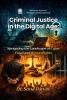
Criminal Justice in the Digital Age: Navigating the Landscape of Cyber Fraud and Human Rights
Keywords:
Cyber Fraud Law, Digital Criminal Justice, Cybercrime and Human Rights, Technology and Rule of Law, Wissira Press, Wissira Academic Books, Books by WissiraSynopsis
The rapid advancement of digital technologies has transformed nearly every aspect of human life, from communication and commerce to governance and social interaction. While these innovations have created unprecedented opportunities for connectivity and efficiency, they have also generated new forms of criminal behaviour that challenge traditional notions of law, justice, and accountability. Among these, cyber fraud has emerged as one of the most pervasive and complex threats of the digital age, operating across borders, exploiting technological vulnerabilities, and affecting individuals, institutions, and states alike.
Criminal Justice in the Digital Age: Navigating the Landscape of Cyber Fraud and Human Rights is conceived as a scholarly and pedagogical response to this evolving reality. The book seeks to examine how criminal justice systems are adapting to digital forms of crime while simultaneously safeguarding fundamental human rights. It recognizes that effective cybercrime control cannot rely solely on technological solutions or punitive measures, but must be grounded in legal principles, ethical governance, and respect for human dignity.
This volume brings together perspectives from criminal law, criminology, digital forensics, human rights law, and public policy to offer an integrated understanding of cyber fraud and its implications. It traces the transformation of crime in digital environments, explores the legal and procedural frameworks governing cybercrime, and critically analyses the impact of investigative and surveillance practices on privacy, due process, and freedom of expression. Special attention is given to victims of cyber fraud, whose experiences often remain underrepresented in legal discourse despite the profound financial, psychological, and social harm they endure.
The book is structured to guide readers progressively from foundational concepts to advanced and future-oriented discussions. Early chapters establish the nature of digital crime and the legal challenges it poses, while later chapters address institutional responses, cross-border enforcement, and emerging technologies such as artificial intelligence in criminal justice. Throughout, the emphasis remains on balance-between security and liberty, innovation and accountability, enforcement efficiency and human rights protection.
This work is intended for a broad audience, including undergraduate and postgraduate students of law and criminology, researchers, legal practitioners, policymakers, law enforcement professionals, and anyone seeking to understand the intersection of technology, crime, and human rights. By combining conceptual clarity with practical insights, the book aims to contribute meaningfully to academic discourse and to support the development of fair, effective, and rights-respecting criminal justice systems in an increasingly digital world.
It is hoped that this book will encourage critical reflection, informed debate, and thoughtful reform, helping readers navigate the complex landscape of cyber fraud and justice in the digital age.
Chapters
-
Chapter-1 The Digital Transformation of Crime and Justice
-
Chapter-2 Foundations of Cyber Fraud in the Modern World
-
Chapter-3 Legal Frameworks Governing Cybercrime
-
Chapter-4 Digital Evidence and Cybercrime Investigation
-
Chapter-5 Cyber Fraud and Human Rights Implications
-
Chapter-6 Victimization, Vulnerability, and Access to Justice
-
Chapter-7 Policing, Prosecution, and Judicial Responses
-
Chapter-8 Globalization, Cross-Border Crime, and Human Rights
-
Chapter-9 The Future of Criminal Justice in a Digital Society
Downloads
References
Castells, M. (2010). The Rise of the Network Society (2nd ed.). Wiley-Blackwell.
Wall, D. S. (2007). Cybercrime: The Transformation of Crime in the Information Age. Polity Press.
Cohen, L. E., & Felson, M. (1979). Social change and crime rate trends. American Sociological Review, 44(4), 588–608.
Button, M., Lewis, C., & Tapley, J. (2014). Fraud Typologies and Victimisation. Routledge.
Levi, M., & Smith, R. G. (2021). Fraud vulnerabilities and the global economy. Crime, Law and Social Change, 76, 1–20.
Cross, C. (2018). Cybercrime and Online Fraud. Palgrave Macmillan.
Brenner, S. W. (2010). Cybercrime: Criminal Threats from Cyberspace. Praeger.
Council of Europe. (2001). Convention on Cybercrime (Budapest Convention). Strasbourg.
Kerr, O. S. (2005). Searches and seizures in a digital world. Harvard Law Review, 119(2), 531–585.
Casey, E. (2011). Digital Evidence and Computer Crime (3rd ed.). Academic Press.
Carrier, B. (2005). File System Forensic Analysis. Addison-Wesley.
Goodison, S. E., Davis, R. C., & Jackson, B. A. (2015). Digital Evidence and the U.S. Criminal Justice System. RAND Corporation.
Solove, D. J. (2008). Understanding Privacy. Harvard University Press.
United Nations Human Rights Council. (2014). The Right to Privacy in the Digital Age. A/HRC/27/37.
European Court of Human Rights. (2015). Roman Zakharov v. Russia (Application No. 47143/06).
Shapland, J., & Hall, M. (2007). What do victims want from criminal justice? Criminal Justice, 7(2), 175–196.
Cross, C., Richards, K., & Smith, R. G. (2016). The reporting experiences of cybercrime victims. Trends & Issues in Crime and Criminal Justice, No. 518.
UNODC. (2015). Handbook on Justice for Victims. United Nations.
Goldsmith, A., & Wall, D. (2019). Crime and Control in the Digital Age. Routledge.
Brodeur, J. P. (2010). The Policing Web. Oxford University Press.
Prosecutors’ Advisory Council of Europe (PACE). (2018). Electronic Evidence Guide for Prosecutors.
Boister, N. (2012). An Introduction to Transnational Criminal Law. Oxford University Press.
Ryngaert, C. (2015). Jurisdiction in International Law (2nd ed.). Oxford University Press.
UNODC. (2017). Mutual Legal Assistance and Extradition. United Nations.
Zuboff, S. (2019). The Age of Surveillance Capitalism. PublicAffairs.
Bennett Moses, L., & Chan, J. (2018). Algorithmic prediction in policing. Policing and Society, 28(7), 806–822.
Floridi, L. (2016). Ethics of Information. Oxford University Press.
Published
License

This work is licensed under a Creative Commons Attribution 4.0 International License.
Creative Commons Attribution 4.0 International (CC BY 4.0) — License Terms
The Creative Commons Attribution 4.0 International License (CC BY 4.0) is one of the most permissive open licenses. It allows others to use, share, and build upon a work for any purpose—including commercial use—provided that proper credit is given to the original creator.
1. Permissions Granted
Under CC BY 4.0, anyone may:
a) Share
Copy and redistribute the material in any medium or format (print, digital, audio, video, etc.).
b) Adapt
Remix, transform, translate, or build upon the material.
c) Commercial Use Allowed
The work may be used for commercial purposes, including resale, inclusion in paid products, or monetized distribution.
d) No Additional Permission Required
Users do not need to contact the author for permission, as long as they follow the license conditions.
2. Attribution Requirements (Core Condition)
Users must give appropriate credit to the original creator. Attribution should include:
- Name of the author/creator
- Title of the work (if available)
- Source (publisher, website, or platform)
- Link to the original work (if online)
- Link to the CC BY 4.0 license
- Indication of any changes made
Example Attribution:
“Title of Work” by Author Name is licensed under CC BY 4.0.
Adapted from the original available at [URL].
3. Indicating Changes
If the material is modified, translated, shortened, or otherwise altered, users must clearly state that changes were made.
Examples:
- “Translated from the original”
- “Adapted from…”
- “Modified version of…”
4. No Additional Restrictions
Users may not:
- Apply legal terms or technological measures (such as DRM) that restrict others from exercising the license rights
- Impose new licensing conditions that contradict CC BY 4.0
5. Rights Not Covered by the License
CC BY 4.0 does not automatically grant:
- Patent rights
- Trademark rights
- Privacy or publicity rights
- Moral rights where they cannot be waived by law
Users must ensure compliance with these separately.
6. Disclaimer of Warranties
The material is provided “as-is.”
The licensor (author/publisher) gives no guarantees regarding accuracy, suitability, or fitness for any purpose.
7. Termination and Reinstatement
- The license remains valid as long as the terms are followed.
- If a user violates the terms (e.g., fails to attribute), the rights terminate automatically.
- Rights may be reinstated if the violation is corrected within 30 days of discovery.
8. International Scope
CC BY 4.0 is designed to work worldwide and is not limited to any specific country’s copyright law.
Suggested Copyright Notice Using CC BY 4.0
© [Year] [Author Name].
This work is licensed under the Creative Commons Attribution 4.0 International License (CC BY 4.0).
To view a copy of this license, visit: https://creativecommons.org/licenses/by/4.0/
You are free to share and adapt this work for any purpose, even commercially, provided that appropriate credit is given.