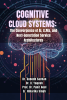
Cognitive Cloud Systems: The Convergence of AI, LLMs, and Next-Generation Service Architectures
Keywords:
Cognitive Cloud Systems, Artificial Intelligence in Cloud, Large Language Models (LLMs), Wissira Press, Wissira Press Academic Books, Books by WissiraSynopsis
Cloud computing has reached a point of architectural maturity. What began as a shift toward elasticity and infrastructure abstraction through containers, microservices, service meshes, and serverless platforms has now become the default operating model for modern software systems. Yet, even as cloud-native practices have stabilized, a deeper transformation is unfolding. Artificial intelligence, machine learning, and large language models are no longer peripheral enhancements layered on top of applications; they are reshaping the very foundations of how systems are designed, operated, and evolved.
Cognitive Cloud Systems: The Convergence of AI, LLMs, and Next-Generation Service Architectures is written at this inflection point. The central premise of this book is simple but far-reaching: intelligence is becoming a core architectural property of the cloud. Modern systems are not only scalable and resilient, but they are also increasingly aware, predictive, and capable of limited, policy-bound autonomy. They observe their own behavior, anticipate demand and failure, and assist humans in making faster, more informed decisions.
The book is designed for a broad but connected audience. Software and platform engineers will find guidance on embedding inference into services, designing semantic and AI-aware APIs, and operating data and vector infrastructure at scale. Reliability and operations teams will learn how predictive signals enhance autoscaling, scheduling, and incident management. Security and compliance professionals will explore patterns for protecting AI pathways, enforcing zero-trust principles, and governing models and prompts as production assets. Technology and product leaders will gain a common language for evaluating cost, risk, and return, and for planning incremental, outcome-driven adoption of cognitive capabilities.
Our hope is that the chapters ahead help you design and operate cloud systems that are not only scalable and reliable, but thoughtful systems that learn, assist, and evolve responsibly. Progress will come incrementally: one well-instrumented service, one governed model, and one carefully designed feedback loop at a time.
Chapters
-
Chapter 1: Cloud-Native + AI: The New Foundation
-
Chapter 2: Microservices to Micromodels
-
Chapter 3: Serverless & FaaS with Intelligent Runtimes
-
Chapter 4: Data, Features, and Vector Infrastructure
-
Chapter 5: Orchestration, Autoscaling, and Placement
-
Chapter 6: Reliability, Self-Healing, and AIOps
-
Chapter 7: Observability, Governance, and AI-Driven Ops
-
Chapter 8: Security, Privacy, and Zero-Trust for AI Workloads
-
Chapter 9: Performance, Cost, and Sustainability Engineering
-
Chapter 10: Patterns, Case Studies, and Migration Roadmaps
Downloads
Published
License

This work is licensed under a Creative Commons Attribution 4.0 International License.
Creative Commons Attribution 4.0 International (CC BY 4.0) — License Terms
The Creative Commons Attribution 4.0 International License (CC BY 4.0) is one of the most permissive open licenses. It allows others to use, share, and build upon a work for any purpose—including commercial use—provided that proper credit is given to the original creator.
1. Permissions Granted
Under CC BY 4.0, anyone may:
a) Share
Copy and redistribute the material in any medium or format (print, digital, audio, video, etc.).
b) Adapt
Remix, transform, translate, or build upon the material.
c) Commercial Use Allowed
The work may be used for commercial purposes, including resale, inclusion in paid products, or monetized distribution.
d) No Additional Permission Required
Users do not need to contact the author for permission, as long as they follow the license conditions.
2. Attribution Requirements (Core Condition)
Users must give appropriate credit to the original creator. Attribution should include:
- Name of the author/creator
- Title of the work (if available)
- Source (publisher, website, or platform)
- Link to the original work (if online)
- Link to the CC BY 4.0 license
- Indication of any changes made
Example Attribution:
“Title of Work” by Author Name is licensed under CC BY 4.0.
Adapted from the original available at [URL].
3. Indicating Changes
If the material is modified, translated, shortened, or otherwise altered, users must clearly state that changes were made.
Examples:
- “Translated from the original”
- “Adapted from…”
- “Modified version of…”
4. No Additional Restrictions
Users may not:
- Apply legal terms or technological measures (such as DRM) that restrict others from exercising the license rights
- Impose new licensing conditions that contradict CC BY 4.0
5. Rights Not Covered by the License
CC BY 4.0 does not automatically grant:
- Patent rights
- Trademark rights
- Privacy or publicity rights
- Moral rights where they cannot be waived by law
Users must ensure compliance with these separately.
6. Disclaimer of Warranties
The material is provided “as-is.”
The licensor (author/publisher) gives no guarantees regarding accuracy, suitability, or fitness for any purpose.
7. Termination and Reinstatement
- The license remains valid as long as the terms are followed.
- If a user violates the terms (e.g., fails to attribute), the rights terminate automatically.
- Rights may be reinstated if the violation is corrected within 30 days of discovery.
8. International Scope
CC BY 4.0 is designed to work worldwide and is not limited to any specific country’s copyright law.
Suggested Copyright Notice Using CC BY 4.0
© [Year] [Author Name].
This work is licensed under the Creative Commons Attribution 4.0 International License (CC BY 4.0).
To view a copy of this license, visit: https://creativecommons.org/licenses/by/4.0/
You are free to share and adapt this work for any purpose, even commercially, provided that appropriate credit is given.