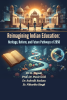
Reimagining Indian Education: Heritage, Reform, and Future Pathways of 2050
Keywords:
Indian Education System, Educational Heritage in India, Education Policy and Reform in India, Wissira, Wissira Research Lab, Wissira Press Publications, Wissira Academic BooksSynopsis
Education in India has always been more than a system of instruction; it has been a reflection of the country’s civilizational values, social aspirations, and collective imagination. From ancient centres of learning that emphasized wisdom and ethical living to modern institutions shaped by policy, globalization, and technology, Indian education has continuously evolved in response to historical, cultural, and economic forces. Yet, this evolution has not been linear or seamless. It has been marked by periods of continuity and disruption, inclusion and exclusion, innovation and inertia.
Reimagining Indian Education: Heritage, Reform, and Future Pathways emerge from the recognition that contemporary debates on education cannot be fully understood without engaging with this layered history. Discussions on curriculum reform, digital learning, equity, governance, and global competitiveness often focus on immediate challenges, overlooking the deeper philosophical and structural roots that shape educational practice in India. This book seeks to bridge that gap by situating present reforms within a broader historical and conceptual context.
The purpose of this book is not to romanticize the past or prescribe a single blueprint for the future. Instead, it offers a reflective and critical exploration of how India’s educational heritage can inform meaningful reform, and how reform, in turn, can prepare learners for uncertain and interconnected futures. The chapters examine education as a social institution-one that shapes identities, redistributes opportunities, and carries ethical responsibilities toward society.
Written for students, educators, researchers, policymakers, and informed readers, this book adopts an interdisciplinary perspective, drawing insights from history, philosophy, sociology, and education policy. It emphasizes clarity, inclusivity, and balance, avoiding technical excess while maintaining academic rigor. Case illustrations and contemporary examples are used to connect theory with lived realities.
At a time when education is expected to respond simultaneously to technological change, social inequality, and global pressures, this book invites readers to pause and reflect. Reimagining education requires not only new policies and tools, but also renewed thinking about purpose, values, and responsibility. It is this reflective journey that the book hopes to support-toward an education system that is rooted in heritage, responsive to reform, and oriented toward humane and sustainable futures.
Chapters
-
Chapter-1 Philosophical Foundations of Indian Education
-
Chapter-2 Colonial Legacies and the Shaping of Modern Schooling
-
Chapter-3 Post-Independence Vision and Nation-Building Through Education
-
Chapter-4 Policy Reforms and the Evolution of Educational Governance
-
Chapter-5 Curriculum, Pedagogy, and the Changing Classroom
-
Chapter-6 Equity, Access, and Social Inclusion in Education
-
Chapter-7 Technology, Digital Learning, and Educational Innovation
-
Chapter-8 Teachers, Institutions, and Academic Leadership
-
Chapter-9 Future Pathways and Global Engagement of Indian Education
Downloads
References
Altekar, A. S. (1965). Education in Ancient India. Motilal Banarsidass.
Mukherjee, S. N. (1951). History of Education in India. Acharya Book Depot.
Radhakrishnan, S. (1956). Indian Philosophy (Vols. 1–2). George Allen & Unwin.
Sharma, R. S. (2005). India’s Ancient Past. Oxford University Press.
UNESCO. (2015). Rethinking Education: Towards a Global Common Good? UNESCO Publishing.
Macaulay, T. B. (1835). Minute on Indian Education. Government of India Archives.
Sharp, H. (1920). Educational Development in India, 1854–1907. Government of India Press.
Kumar, K. (1988). Political Agenda of Education: A Study of Colonialist and Nationalist Ideas. Sage Publications.
Viswanathan, G. (1989). Masks of Conquest: Literary Study and British Rule in India. Oxford University Press.
Said, E. W. (1978). Orientalism. Pantheon Books.
Government of India. (1950). Report of the University Education Commission (Radhakrishnan Commission).
Government of India. (1966). Education and National Development (Kothari Commission).
Tilak, J. B. G. (1995). Higher Education in India: An Analysis of Investment and Financing. Economic and Political Weekly.
Sen, A. (1999). Development as Freedom. Oxford University Press.
Dreze, J., & Sen, A. (2013). An Uncertain Glory: India and Its Contradictions. Princeton University Press.
Government of India. (1968). National Policy on Education.
Government of India. (1986). National Policy on Education (Revised 1992).
Government of India. (2020). National Education Policy 2020. Ministry of Education.
Tilak, J. B. G. (2007). Financing Education in India. NUEPA.
World Bank. (2011). Governance and Accountability in India’s Education System. World Bank Publications.
National Council of Educational Research and Training (NCERT). (2005). National Curriculum Framework.
Bruner, J. S. (1960). The Process of Education. Harvard University Press.
Freire, P. (1970). Pedagogy of the Oppressed. Continuum.
Darling-Hammond, L. (2010). The Flat World and Education. Teachers College Press.
OECD. (2018). The Future of Education and Skills: Education 2030. OECD Publishing.
Government of India. (2009). Right of Children to Free and Compulsory Education Act.
Thorat, S., & Newman, K. (2010). Blocked by Caste: Economic Discrimination in Modern India. Oxford University Press.
UNICEF. (2019). Education Equity and Inclusion. UNICEF Publications.
Sen, A. (2000). Social Exclusion: Concept, Application, and Scrutiny. Asian Development Bank.
Nambissan, G. B. (2013). Sociology of Education in India. Oxford University Press.
Government of India. (2021). PM eVIDYA: A Comprehensive Initiative for Digital Education.
Mishra, P., & Koehler, M. J. (2006). Technological Pedagogical Content Knowledge: A Framework for Teacher Knowledge. Teachers College Record.
UNESCO. (2020). Education in a Post-COVID World: Nine Ideas for Public Action.
Selwyn, N. (2016). Education and Technology: Key Issues and Debates. Bloomsbury Academic.
OECD. (2020). Digital Education Outlook. OECD Publishing.
Government of India. (2019). Draft National Education Policy – Teacher Education Reforms.
Darling-Hammond, L. (2017). Teaching in the Flat World. Teachers College Press.
Bush, T. (2011). Theories of Educational Leadership and Management. Sage Publications.
Altbach, P. G. (2015). Global Perspectives on Higher Education. Johns Hopkins University Press.
National Institute of Educational Planning and Administration (NIEPA). (2018). School Leadership Development in India.
UNESCO. (2015). Education 2030: Incheon Declaration and Framework for Action.
World Economic Forum. (2020). Schools of the Future: Defining New Models of Education.
Marginson, S. (2016). Higher Education and the Common Good. Melbourne University Press.
Government of India. (2020). Internationalization of Education under NEP 2020.
OECD. (2019). Trends Shaping Education. OECD Publishing.
Published
License

This work is licensed under a Creative Commons Attribution 4.0 International License.
Creative Commons Attribution 4.0 International (CC BY 4.0) — License Terms
The Creative Commons Attribution 4.0 International License (CC BY 4.0) is one of the most permissive open licenses. It allows others to use, share, and build upon a work for any purpose—including commercial use—provided that proper credit is given to the original creator.
1. Permissions Granted
Under CC BY 4.0, anyone may:
a) Share
Copy and redistribute the material in any medium or format (print, digital, audio, video, etc.).
b) Adapt
Remix, transform, translate, or build upon the material.
c) Commercial Use Allowed
The work may be used for commercial purposes, including resale, inclusion in paid products, or monetized distribution.
d) No Additional Permission Required
Users do not need to contact the author for permission, as long as they follow the license conditions.
2. Attribution Requirements (Core Condition)
Users must give appropriate credit to the original creator. Attribution should include:
- Name of the author/creator
- Title of the work (if available)
- Source (publisher, website, or platform)
- Link to the original work (if online)
- Link to the CC BY 4.0 license
- Indication of any changes made
Example Attribution:
“Title of Work” by Author Name is licensed under CC BY 4.0.
Adapted from the original available at [URL].
3. Indicating Changes
If the material is modified, translated, shortened, or otherwise altered, users must clearly state that changes were made.
Examples:
- “Translated from the original”
- “Adapted from…”
- “Modified version of…”
4. No Additional Restrictions
Users may not:
- Apply legal terms or technological measures (such as DRM) that restrict others from exercising the license rights
- Impose new licensing conditions that contradict CC BY 4.0
5. Rights Not Covered by the License
CC BY 4.0 does not automatically grant:
- Patent rights
- Trademark rights
- Privacy or publicity rights
- Moral rights where they cannot be waived by law
Users must ensure compliance with these separately.
6. Disclaimer of Warranties
The material is provided “as-is.”
The licensor (author/publisher) gives no guarantees regarding accuracy, suitability, or fitness for any purpose.
7. Termination and Reinstatement
- The license remains valid as long as the terms are followed.
- If a user violates the terms (e.g., fails to attribute), the rights terminate automatically.
- Rights may be reinstated if the violation is corrected within 30 days of discovery.
8. International Scope
CC BY 4.0 is designed to work worldwide and is not limited to any specific country’s copyright law.
Suggested Copyright Notice Using CC BY 4.0
© [Year] [Author Name].
This work is licensed under the Creative Commons Attribution 4.0 International License (CC BY 4.0).
To view a copy of this license, visit: https://creativecommons.org/licenses/by/4.0/
You are free to share and adapt this work for any purpose, even commercially, provided that appropriate credit is given.









