Chapter 1: Introduction to Unseen Biases
Synopsis
Defining Bias
Bias refers to a deviation from objective judgment, often rooted in subconscious preferences and shortcuts. It is not always malicious, but it shapes everyday choices.
Bias refers to a systematic deviation from objective judgment, often shaped by subconscious preferences, mental shortcuts, or ingrained patterns of thought. While the word frequently carries a negative connotation, bias is not always malicious or intentional. Instead, it represents the human tendency to rely on heuristics—quick rules of thumb—that simplify decision-making in complex environments.
At its core, bias is a product of the brain’s effort to conserve cognitive resources. Rather than evaluating every situation from scratch, individuals rely on prior experiences, cultural influences, and internalized beliefs. These shortcuts can lead to efficient decisions but can also distort perception, interpretation, and reasoning.
For example, bias can manifest in how we evaluate people, assign trust, or select opportunities. In many cases, individuals may remain unaware of these hidden influences, assuming their choices are rational and objective. Yet, beneath the surface, subconscious leanings subtly steer judgments and actions.
Importantly, bias does not operate solely in negative contexts. It can provide stability and consistency in social interactions, foster loyalty within groups, or enable rapid decisions in high-pressure scenarios. However, when left unchecked, bias can also reinforce stereotypes, hinder fairness, and distort truth-seeking processes.
Defining bias in this way sets the foundation for exploring its unseen role in everyday life. Understanding that bias exists as both a natural cognitive mechanism and a potential source of distortion is the first step toward recognizing blind spots in the human mind.
Published
January 3, 2026
Copyright (c) 2026 Wissira Press
How to Cite
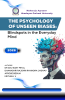
Chapter 1: Introduction to Unseen Biases. (2026). In The Psychology of Unseen Biases: Blindspots in the Everyday Mind. Wissira Press. https://books.wissira.us/index.php/WIL/catalog/book/116/chapter/961