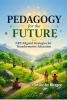
Pedagogy for the Future: NEP-Aligned Strategies for Transformative Education
Keywords:
Education, creativity, critical thinking, collaboration, adaptability, ethical responsibility, Pedagogy, Transformative EducationSynopsis
Education stands at a defining moment in human history. The rapid pace of technological advancement, the emergence of new forms of knowledge, changing workforce expectations, and growing global interconnectedness have transformed the way societies perceive learning and development. Traditional models of education, which were primarily designed to transmit information, are increasingly being challenged by the need to cultivate creativity, critical thinking, collaboration, adaptability, and ethical responsibility.
India's National Education Policy (NEP) 2020 represents a landmark step toward reimagining education for the twenty-first century. The policy envisions an education system that is holistic, flexible, multidisciplinary, inclusive, and learner-cantered. It seeks to shift the focus from rote memorization and examination-driven learning to competency development, experiential engagement, critical inquiry, and lifelong learning.
The book Pedagogy for the Future: NEP-Aligned Strategies for Transformative Education has been conceived with the objective of exploring pedagogical approaches that support the realization of this vision. While educational reforms often focus on curriculum and policy structures, meaningful transformation ultimately occurs within classrooms through effective teaching and learning practices.
The chapters in this volume address a wide range of themes central to contemporary educational discourse. Beginning with the philosophical foundations of transformative education and the guiding principles of NEP 2020, the book explores competency-based learning, outcome-oriented education, experiential and inquiry-based pedagogies, digital learning environments, multidisciplinary approaches, inclusive classroom practices, assessment reforms, teacher professional development, and future educational innovations.
The future of education will be shaped by emerging technologies, sustainability concerns, globalization, and evolving societal expectations. However, the true measure of educational success will continue to depend on how effectively institutions cultivate human potential.
It is hoped that this volume will encourage readers to reflect critically on existing practices, embrace innovation thoughtfully, and participate actively in shaping the future of education. The journey toward transformative education is a collective endeavour, requiring collaboration among educators, institutions, communities, and policymakers.
Chapters
-
Foundations of Transformative Education under NEP 2020
-
Competency-Based Learning and Outcome-Oriented Education
-
Experiential, Inquiry-Based, and Discovery Learning
-
Technology-Enabled Teaching and Digital Pedagogy
-
Multidisciplinary and Holistic Education Practices
-
Inclusive and Equitable Classroom Pedagogy
-
Assessment Reforms and Feedback-Cantered Learning
-
Teacher Professional Development and Reflective Practice
-
Future Directions in Education: Innovation, Sustainability, and Global Citizenship
Downloads
References
Chapter 1: Foundations of Transformative Education under NEP 2020
• Ministry of Education, Government of India. (2020). National Education Policy 2020. New Delhi: Government of India.
• Dewey, J. (1938). Experience and Education. New York: Macmillan.
• Freire, P. (1970). Pedagogy of the Oppressed. New York: Continuum.
Chapter 2: Competency-Based Learning and Outcome-Oriented Education
• Spady, W. G. (1994). Outcome-Based Education: Critical Issues and Answers. Arlington, VA: American Association of School Administrators.
• Harden, R. M. (2007). Outcome-based education: The future is today. Medical Teacher, 29(7), 625–629.
• Biggs, J., & Tang, C. (2011). Teaching for Quality Learning at University (4th ed.). Maidenhead: Open University Press.
Chapter 3: Experiential, Inquiry-Based, and Discovery Learning
• Kolb, D. A. (2015). Experiential Learning: Experience as the Source of Learning and Development (2nd ed.). Upper Saddle River, NJ: Pearson.
• Dewey, J. (1938). Experience and Education. New York: Macmillan.
• Prince, M., & Felder, R. (2006). Inductive teaching and learning methods. Journal of Engineering Education, 95(2), 123–138.
Chapter 4: Technology-Enabled Teaching and Digital Pedagogy
• Mishra, P., & Koehler, M. J. (2006). Technological pedagogical content knowledge. Teachers College Record, 108(6), 1017–1054.
• Bates, A. W. (2022). Teaching in a Digital Age (3rd ed.). Vancouver: Tony Bates Associates.
• UNESCO. (2023). Global Education Monitoring Report: Technology in Education. Paris: UNESCO.
Chapter 5: Multidisciplinary and Holistic Education Practices
• Ministry of Education, Government of India. (2020). National Education Policy 2020. New Delhi: Government of India.
• Drake, S. M., & Burns, R. C. (2004). Meeting Standards Through Integrated Curriculum. Alexandria, VA: ASCD.
• Miller, J. P. (2007). The Holistic Curriculum (2nd ed.). Toronto: University of Toronto Press.
Chapter 6: Inclusive and Equitable Classroom Pedagogy
• Ainscow, M. (2020). Promoting inclusion and equity in education. International Journal of Inclusive Education, 24(1), 1–6.
• UNESCO. (2020). Global Education Monitoring Report 2020: Inclusion and Education. Paris: UNESCO.
• CAST. (2018). Universal Design for Learning Guidelines Version 2.2. Wakefield, MA: CAST.
Chapter 7: Assessment Reforms and Feedback-Cantered Learning
• Black, P., & Wiliam, D. (1998). Assessment and classroom learning. Assessment in Education, 5(1), 7–74.
• Hattie, J., & Timperley, H. (2007). The power of feedback. Review of Educational Research, 77(1), 81–112.
• Brookhart, S. M. (2017). How to Give Effective Feedback to Your Students (2nd ed.). Alexandria, VA: ASCD.
Chapter 8: Teacher Professional Development and Reflective Practice
• Schön, D. A. (1983). The Reflective Practitioner. New York: Basic Books.
• Darling-Hammond, L., Hyler, M. E., & Gardner, M. (2017). Effective Teacher Professional Development. Palo Alto, CA: Learning Policy Institute.
• Fullan, M. (2020). Leading in a Culture of Change (2nd ed.). San Francisco: Jossey-Bass.
Chapter 9: Future Directions in Education: Innovation, Sustainability, and Global Citizenship
• UNESCO. (2017). Education for Sustainable Development Goals: Learning Objectives. Paris: UNESCO.
• UNESCO. (2021). Reimagining Our Futures Together: A New Social Contract for Education. Paris: UNESCO.
Downloads
Published
License

This work is licensed under a Creative Commons Attribution 4.0 International License.
Creative Commons Attribution 4.0 International (CC BY 4.0) — License Terms
The Creative Commons Attribution 4.0 International License (CC BY 4.0) is one of the most permissive open licenses. It allows others to use, share, and build upon a work for any purpose—including commercial use—provided that proper credit is given to the original creator.
1. Permissions Granted
Under CC BY 4.0, anyone may:
a) Share
Copy and redistribute the material in any medium or format (print, digital, audio, video, etc.).
b) Adapt
Remix, transform, translate, or build upon the material.
c) Commercial Use Allowed
The work may be used for commercial purposes, including resale, inclusion in paid products, or monetized distribution.
d) No Additional Permission Required
Users do not need to contact the author for permission, as long as they follow the license conditions.
2. Attribution Requirements (Core Condition)
Users must give appropriate credit to the original creator. Attribution should include:
- Name of the author/creator
- Title of the work (if available)
- Source (publisher, website, or platform)
- Link to the original work (if online)
- Link to the CC BY 4.0 license
- Indication of any changes made
Example Attribution:
“Title of Work” by Author Name is licensed under CC BY 4.0.
Adapted from the original available at [URL].
3. Indicating Changes
If the material is modified, translated, shortened, or otherwise altered, users must clearly state that changes were made.
Examples:
- “Translated from the original”
- “Adapted from…”
- “Modified version of…”
4. No Additional Restrictions
Users may not:
- Apply legal terms or technological measures (such as DRM) that restrict others from exercising the license rights
- Impose new licensing conditions that contradict CC BY 4.0
5. Rights Not Covered by the License
CC BY 4.0 does not automatically grant:
- Patent rights
- Trademark rights
- Privacy or publicity rights
- Moral rights where they cannot be waived by law
Users must ensure compliance with these separately.
6. Disclaimer of Warranties
The material is provided “as-is.”
The licensor (author/publisher) gives no guarantees regarding accuracy, suitability, or fitness for any purpose.
7. Termination and Reinstatement
- The license remains valid as long as the terms are followed.
- If a user violates the terms (e.g., fails to attribute), the rights terminate automatically.
- Rights may be reinstated if the violation is corrected within 30 days of discovery.
8. International Scope
CC BY 4.0 is designed to work worldwide and is not limited to any specific country’s copyright law.
Suggested Copyright Notice Using CC BY 4.0
© [Year] [Author Name].
This work is licensed under the Creative Commons Attribution 4.0 International License (CC BY 4.0).
To view a copy of this license, visit: https://creativecommons.org/licenses/by/4.0/
You are free to share and adapt this work for any purpose, even commercially, provided that appropriate credit is given.









