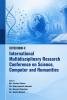
International Multidisciplinary Research Conference on Science, Computer and Humanities (Edited Book)
Keywords:
Multidisciplinary, Research, Science, Computer, HumanitiesSynopsis
The twenty-first century has witnessed unprecedented transformations driven by technological innovation, globalization, environmental concerns, evolving social structures, and rapidly changing geopolitical dynamics. These developments have not only reshaped the way societies function but have also generated complex challenges that demand interdisciplinary understanding and collaborative solutions. In this context, the present volume, International Multidisciplinary Research Conference on Science, Computer and Humanities, brings together a diverse collection of scholarly contributions that explore contemporary issues from multiple academic perspectives.
The chapters included in this book reflect the growing recognition that the boundaries between disciplines are becoming increasingly interconnected. Scientific advancements influence social and cultural realities, technological innovations transform education and governance, environmental sustainability shapes economic policies, and geopolitical developments affect national and international security frameworks. Addressing these interconnected challenges requires a comprehensive approach that integrates insights from science, technology, humanities, social sciences, management, literature, and public policy.
This volume presents twelve carefully selected chapters that collectively examine a broad spectrum of contemporary themes. Topics range from the evolution of Hindi language in the digital era and the transformative impact of artificial intelligence on education to sustainable business models, green finance, and environmental literary studies. The book also explores critical issues related to e-governance, regional security dynamics, defence modernization, emerging technologies, emotional intelligence among university students, and the intersection of caste and gender in contemporary Indian society. Together, these contributions offer valuable perspectives on the opportunities and challenges facing modern societies.
One of the distinguishing features of this volume is its commitment to multidisciplinary inquiry. Rather than examining issues in isolation, the chapters emphasize the relationships among technological progress, social development, environmental responsibility, cultural understanding, and strategic decision-making. Such an approach is essential in a world where complex problems often transcend traditional disciplinary boundaries. By encouraging dialogue across fields of study, the book seeks to promote innovative thinking and evidence-based solutions to pressing global concerns.
The editors express their sincere appreciation to all authors, reviewers, conference organizers, and academic contributors whose dedication and expertise made this publication possible. Their commitment to research excellence and knowledge dissemination has significantly enriched the quality and relevance of this volume. Gratitude is also extended to the institutions and organizations that continue to support interdisciplinary research and academic collaboration.
Chapters
-
डिजिटल युग में हिंदी भाषा का विकासः सामाजिक और सांस्कृतिक परिवर्तन
-
Sustainable Business Models in Emerging Markets: Balancing Profitability and Environmental Responsibility
-
Sustainable Finance and Green Investment: Driving Innovation for a Resilient Future
-
English Language & Artificial Intelligence: Transforming Communication in Education
-
Cognitive Behaviour and Emotional Intelligence among University Students
-
Impact of English Literature on Social Awareness and Cultural Studies
-
डिजिटल इंडिया अभियान और ई-गवर्नेंस की प्रभावशीलता
-
बांग्लादेश, मालदीव और श्रीलंका में चीन का बढ़ता प्रभाव : भारतीय सुरक्षा के लिए उभरती चुनौतियाँ
-
Ecocriticism and Sustainable Development: Literary Perspectives on Human–Nature Relations
-
Mission Sudarshan Chakra and India’s Defence Modernization: Addressing Future Security Challenge
-
Artificial Intelligence, Defence Innovation, and Future Strategic Landscapes
-
Double Burdens, Distinct Resistances: Mapping Caste and Gender among India’s Scheduled Caste Women
-
सोशल मीडिया प्लेटफॉर्म्स का युवाओं की राजनीतिक भागीदारी एवं मतदान व्यवहार पर प्रभाव: एक विश्लेषणात्मक अध्ययन
-
डिजिटल मीडिया और राजनीतिक चेतना का बदलता स्वरूप: भारतीय युवाओं के संदर्भ में अध्ययन
-
राष्ट्रीय शिक्षा नीति 2020 के अंतर्गत डिजिटल शिक्षा एवं कृत्रिम बुद्धिमत्ता (AI) की भूमिका: एक अध्ययन
Downloads
References
अध्याय 1: डिजिटल युग में हिंदी भाषा का विकासः सामाजिक और सांस्कृतिक परिवर्तन
1. Crystal, D. (2011). Internet Linguistics. Routledge.
2. Mishra, V. (2018). Hindi in the digital age: Emerging trends and challenges. Indian Journal of Language Studies, 12(2), 45–58.
3. Government of India. (2023). Digital India Programme. Ministry of Electronics and Information Technology.
Chapter 2 : Sustainable Business Models in Emerging Markets: Balancing Profitability and Environmental Responsibility
1. Bocken, N. M. P., Short, S. W., Rana, P., & Evans, S. (2014). A literature and practice review to develop sustainable business model archetypes. Journal of Cleaner Production, 65, 42–56.
2. Michael E. Porter, & Mark R. Kramer. (2011). Creating shared value. Harvard Business Review, 89(1–2), 62–77.
3. Schaltegger, S., Hansen, E. G., & Lüdeke-Freund, F. (2016). Business models for sustainability. Organization & Environment, 29(1), 3–10.
Chapter 3 : Sustainable Finance and Green Investment: Driving Innovation for a Resilient Future
1. OECD. (2022). Green Finance and Investment Report. OECD Publishing.
2. United Nations Environment Programme. (2023). Global Status Report for Sustainable Finance.
3. Sachs, J. D. (2015). The Age of Sustainable Development. Columbia University Press.
Chapter 4: English Language & Artificial Intelligence: Transforming Communication in Education
1. Holmes, W., Bialik, M., & Fadel, C. (2019). Artificial Intelligence in Education. Center for Curriculum Redesign.
2. Luckin, R. (2018). Machine Learning and Human Intelligence. UCL Institute of Education Press.
3. Kukulska-Hulme, A. (2020). Mobile-assisted language learning and AI. ReCALL, 32(2), 123–136.
Chapter 5: Cognitive Behaviour and Emotional Intelligence among University Students
1. Goleman, D. (1995). Emotional Intelligence. Bantam Books.
2. Mayer, J. D., Salovey, P., & Caruso, D. R. (2008). Emotional intelligence: New ability or eclectic traits? American Psychologist, 63(6), 503–517.
3. Beck, J. S. (2011). Cognitive Behaviour Therapy. Guilford Press.
Chapter 6: Impact of English Literature on Social Awareness and Cultural Studies
1. Raymond Williams. (1983). Culture and Society. Columbia University Press.
2. Edward W. Said. (1978). Orientalism. Pantheon Books.
3. Barry, P. (2017). Beginning Theory. Manchester University Press.
अध्याय 7: डिजिटल इंडिया अभियान और ई-गवर्नेंस की प्रभावशीलता
ऑनलाइन सेवाएँ, ग्रामीण पहुँच और प्रशासनिक परिवर्तन
1. Government of India. (2024). Digital India Annual Report. Ministry of Electronics and Information Technology.
2. Heeks, R. (2006). Implementing and Managing eGovernment. Sage Publications.
3. United Nations. (2024). E-Government Survey. United Nations.
अध्याय 8: बांग्लादेश, मालदीव और श्रीलंका में चीन का बढ़ता प्रभाव : भारतीय सुरक्षा के लिए उभरती चुनौतियाँ
1. Brewster, D. (2018). India and China at Sea. Oxford University Press.
2. Pant, H. V. (2020). India’s National Security. Oxford University Press.
3. Institute for Defence Studies and Analyses. (2023). South Asian Strategic Developments Report.
Chapter 9: Ecocriticism and Sustainable Development: Literary Perspectives on Human–Nature Relations
1. Cheryll Glotfelty, & Harold Fromm. (1996). The Ecocriticism Reader. University of Georgia Press.
2. Garrard, G. (2012). Ecocriticism. Routledge.
3. Buell, L. (2005). The Future of Environmental Criticism. Blackwell Publishing.
Chapter 10: Mission Sudarshan Chakra and India’s Defence Modernization: Addressing Future Security Challenge
1. Ministry of Defence, Government of India. (2024). Annual Report 2023–24.
2. Singh, J. (2013). India’s Defence Modernization. Knowledge World.
3. Cohen, S. P., & Dasgupta, S. (2010). Arming without Aiming. Brookings Institution Press.
Chapter 11: Artificial Intelligence, Defence Innovation, and Future Strategic Landscapes
1. Russell, S., & Norvig, P. (2021). Artificial Intelligence: A Modern Approach. Pearson.
2. Scharre, P. (2018). Army of None. W. W. Norton.
3. NATO. (2023). Artificial Intelligence Strategy Report.
Chapter 12: Double Burdens, Distinct Resistances: Mapping Caste and Gender among India’s Scheduled Caste Women
1. B. R. Ambedkar. (1936/2014). Annihilation of Caste. Navayana.
2. Rege, S. (2006). Writing Caste/Writing Gender. Zubaan.
3. Guru, G. (1995). Dalit women talk differently. Economic and Political Weekly, 30(41–42), 2548–2550.
अध्याय 13: सोशल मीडिया प्लेटफॉर्म्स का युवाओं की राजनीतिक भागीदारी एवं मतदान व्यवहार पर प्रभाव: एक विश्लेषणात्मक अध्ययन
1. Manuel Castells. (2012). Networks of Outrage and Hope. Polity Press.
2. Gil de Zúñiga, H., Molyneux, L., & Zheng, P. (2014). Social media, political expression, and political participation. Journal of Communication, 64(4), 612–634.
3. Boulianne, S. (2015). Social media use and participation: A meta-analysis of current research. Information, Communication & Society, 18(5), 524–538.
अध्याय 14: डिजिटल मीडिया और राजनीतिक चेतना का बदलता स्वरूप: भारतीय युवाओं के संदर्भ में अध्ययन
1. Bennett, W. L., & Segerberg, A. (2013). The Logic of Connective Action. Cambridge University Press.
2. Chadwick, A. (2017). The Hybrid Media System (2nd ed.). Oxford University Press.
3. Jenkins, H., Ford, S., & Green, J. (2013). Spreadable Media. New York University Press.
अध्याय 15: राष्ट्रीय शिक्षा नीति 2020 के अंतर्गत डिजिटल शिक्षा एवं कृत्रिम बुद्धिमत्ता (AI) की भूमिका: एक अध्ययन
1. Government of India. (2020). National Education Policy 2020. Ministry of Education, Government of India.
2. UNESCO. (2023). Guidance for Generative AI in Education and Research. Paris: UNESCO.
3. Holmes, W., Bialik, M., & Fadel, C. (2019). Artificial Intelligence in Education. Center for Curriculum Redesign.
Downloads
Published
License

This work is licensed under a Creative Commons Attribution 4.0 International License.
Creative Commons Attribution 4.0 International (CC BY 4.0) — License Terms
The Creative Commons Attribution 4.0 International License (CC BY 4.0) is one of the most permissive open licenses. It allows others to use, share, and build upon a work for any purpose—including commercial use—provided that proper credit is given to the original creator.
1. Permissions Granted
Under CC BY 4.0, anyone may:
a) Share
Copy and redistribute the material in any medium or format (print, digital, audio, video, etc.).
b) Adapt
Remix, transform, translate, or build upon the material.
c) Commercial Use Allowed
The work may be used for commercial purposes, including resale, inclusion in paid products, or monetized distribution.
d) No Additional Permission Required
Users do not need to contact the author for permission, as long as they follow the license conditions.
2. Attribution Requirements (Core Condition)
Users must give appropriate credit to the original creator. Attribution should include:
- Name of the author/creator
- Title of the work (if available)
- Source (publisher, website, or platform)
- Link to the original work (if online)
- Link to the CC BY 4.0 license
- Indication of any changes made
Example Attribution:
“Title of Work” by Author Name is licensed under CC BY 4.0.
Adapted from the original available at [URL].
3. Indicating Changes
If the material is modified, translated, shortened, or otherwise altered, users must clearly state that changes were made.
Examples:
- “Translated from the original”
- “Adapted from…”
- “Modified version of…”
4. No Additional Restrictions
Users may not:
- Apply legal terms or technological measures (such as DRM) that restrict others from exercising the license rights
- Impose new licensing conditions that contradict CC BY 4.0
5. Rights Not Covered by the License
CC BY 4.0 does not automatically grant:
- Patent rights
- Trademark rights
- Privacy or publicity rights
- Moral rights where they cannot be waived by law
Users must ensure compliance with these separately.
6. Disclaimer of Warranties
The material is provided “as-is.”
The licensor (author/publisher) gives no guarantees regarding accuracy, suitability, or fitness for any purpose.
7. Termination and Reinstatement
- The license remains valid as long as the terms are followed.
- If a user violates the terms (e.g., fails to attribute), the rights terminate automatically.
- Rights may be reinstated if the violation is corrected within 30 days of discovery.
8. International Scope
CC BY 4.0 is designed to work worldwide and is not limited to any specific country’s copyright law.
Suggested Copyright Notice Using CC BY 4.0
© [Year] [Author Name].
This work is licensed under the Creative Commons Attribution 4.0 International License (CC BY 4.0).
To view a copy of this license, visit: https://creativecommons.org/licenses/by/4.0/
You are free to share and adapt this work for any purpose, even commercially, provided that appropriate credit is given.









