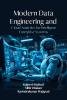
Modern Data Engineering and Cloud Analytics for Intelligent Enterprise Systems
Keywords:
Engineering, Analytics, Intelligent, Enterprise, CloudSynopsis
The modern business landscape is being transformed by an unprecedented growth in data generation, digital connectivity, and intelligent technologies. Organizations across industries are no longer competing solely on products, services, or operational efficiency; they are increasingly competing on their ability to collect, manage, analyze, and act upon data. In this environment, data has emerged as one of the most valuable strategic assets, driving innovation, improving decision-making, and enabling organizations to respond rapidly to changing market conditions. As enterprises continue their digital transformation journeys, the disciplines of data engineering and cloud analytics have become essential foundations for building intelligent and resilient business systems.
This book, Modern Data Engineering and Cloud Analytics for Intelligent Enterprise Systems, has been written to provide a comprehensive understanding of the technologies, methodologies, and architectural principles that underpin modern data-driven enterprises. It aims to bridge the gap between theoretical concepts and practical implementation by exploring how organizations can design scalable data infrastructures, leverage cloud-native technologies, and harness advanced analytics to generate meaningful business value.
The rapid evolution of cloud computing has fundamentally changed the way organizations store, process, and analyze information. Traditional on-premises infrastructures are increasingly being replaced by flexible, scalable, and cost-effective cloud platforms capable of supporting complex analytical workloads. Simultaneously, advances in artificial intelligence, machine learning, streaming analytics, and distributed computing have expanded the possibilities for extracting insights from vast and diverse datasets. These developments have created new opportunities for organizations to become truly intelligent enterprises-businesses that use data and technology as central components of strategy, operations, and innovation.
This book is organized into nine chapters that guide readers through the complete ecosystem of modern data engineering and cloud analytics. The early chapters introduce the foundations of enterprise data management, data architecture, governance, and cloud computing principles. Subsequent chapters explore data integration, pipeline engineering, big data processing, and real-time analytics, highlighting the technologies and frameworks that enable large-scale data operations. The later chapters focus on artificial intelligence, advanced analytics, security, privacy, reliability, and emerging trends such as data mesh, digital twins, edge computing, and autonomous analytics.
A distinguishing feature of this book is its emphasis on the integration of technology, business strategy, and organizational transformation. Data engineering is presented not merely as a technical discipline but as a critical enabler of enterprise intelligence. Similarly, cloud analytics is examined not only as a collection of tools and platforms but as a catalyst for innovation, operational excellence, and competitive advantage. Throughout the book, practical examples, conceptual explanations, and industry-oriented discussions are used to demonstrate how organizations can apply these technologies effectively in real-world environments.
This text is intended for a broad audience, including undergraduate and postgraduate students, researchers, data engineers, cloud architects, analytics professionals, information technology managers, and business leaders. Readers seeking to understand the modern data ecosystem will find both foundational knowledge and advanced perspectives that can support academic study, professional development, and organizational initiatives.
As technology continues to evolve, the importance of intelligent enterprise systems will only increase. Future organizations will depend on their ability to manage complex data environments, integrate artificial intelligence into decision-making processes, and build adaptive infrastructures capable of supporting continuous innovation. It is our hope that this book serves as a valuable guide for understanding these transformations and provides readers with the knowledge necessary to contribute meaningfully to the next generation of data-driven enterprises.
We extend our gratitude to the researchers, practitioners, educators, and technology communities whose contributions have advanced the fields of data engineering, cloud computing, analytics, and artificial intelligence. Their innovations and insights continue to shape the future of intelligent enterprise systems and inspire ongoing learning and discovery.
May this book encourage curiosity, foster innovation, and support the development of intelligent solutions that transform data into meaningful value for organizations and society alike.
Chapters
-
Chapter 1: Foundations of Modern Data Engineering and Intelligent Enterprises
-
Chapter 2: Data Architecture, Modelling, and Governance
-
Chapter 3: Cloud Computing Foundations for Data Engineering
-
Chapter 4: Data Integration, ETL, ELT, and Pipeline Engineering
-
Chapter 5: Big Data Platforms and Distributed Analytics
-
Chapter 6: Real-Time Data Processing and Streaming Analytics
-
Chapter 7: Artificial Intelligence and Advanced Analytics in Cloud Environments
-
Chapter 8: Security, Privacy, and Reliability in Enterprise Data Systems
-
Chapter 9: Future Trends and Intelligent Enterprise Transformation
Downloads
References
Chapter 1: Foundations of Modern Data Engineering and Intelligent Enterprises
1. Kimball, R., & Ross, M. (2013). The Data Warehouse Toolkit: The Definitive Guide to Dimensional Modelling (3rd ed.). Wiley.
2. Redman, T. C. (2013). Data Driven: Profiting from Your Most Important Business Asset. Harvard Business Review Press.
3. Provost, F., & Fawcett, T. (2013). Data Science for Business. O'Reilly Media.
4. Davenport, T. H., & Harris, J. G. (2017). Competing on Analytics: The New Science of Winning (Updated ed.). Harvard Business Review Press.
5. Marr, B. (2015). Big Data: Using SMART Big Data, Analytics and Metrics to Make Better Decisions and Improve Performance. Wiley.
6. McAfee, A., & Brynjolfsson, E. (2012). Big Data: The Management Revolution. Harvard Business Review, 90(10), 60–68.
Chapter 2: Data Architecture, Modelling, and Governance
1. DAMA International. (2017). The DAMA Guide to the Data Management Body of Knowledge (DAMA-DMBOK2). Technics Publications.
2. Simsion, G. C., & Witt, G. C. (2005). Data Modelling Essentials (3rd ed.). Morgan Kaufmann.
3. Loshin, D. (2010). Master Data Management. Morgan Kaufmann.
4. Otto, B. (2015). Quality and Value of the Data Resource in Large Enterprises. Information Systems Management, 32(3), 234–251.
5. Khatri, V., & Brown, C. V. (2010). Designing Data Governance. Communications of the ACM, 53(1), 148–152.
6. Ladley, J. (2019). Data Governance: How to Design, Deploy and Sustain an Effective Data Governance Program (2nd ed.). Academic Press.
Chapter 3: Cloud Computing Foundations for Data Engineering
1. Erl, T., Puttini, R., & Mahmood, Z. (2013). Cloud Computing: Concepts, Technology & Architecture. Pearson.
2. Buyya, R., Broberg, J., & Goscinski, A. (2011). Cloud Computing: Principles and Paradigms. Wiley.
3. Furht, B., & Escalante, A. (2010). Handbook of Cloud Computing. Springer.
4. Mell, P., & Grance, T. (2011). The NIST Definition of Cloud Computing. National Institute of Standards and Technology Special Publication 800-145.
5. Armbrust, M., et al. (2010). A View of Cloud Computing. Communications of the ACM, 53(4), 50–58.
6. Marston, S., Li, Z., Bandyopadhyay, S., Zhang, J., & Ghalsasi, A. (2011). Cloud Computing-The Business Perspective. Decision Support Systems, 51(1), 176–189.
Chapter 4: Data Integration, ETL, ELT, and Pipeline Engineering
1. Vassiliadis, P. (2009). A Survey of Extract–Transform–Load Technology. International Journal of Data Warehousing and Mining, 5(3), 1–27.
2. Kimball, R., Caserta, J., et al. (2011). The Data Warehouse ETL Toolkit. Wiley.
3. Kleppmann, M. (2017). Designing Data-Intensive Applications. O'Reilly Media.
4. Housley, R. (2021). Streaming Data Pipelines. O'Reilly Media.
5. Burns, M. (2021). Designing Cloud Data Platforms. O'Reilly Media.
6. Reis, J., & Housley, M. (2022). Fundamentals of Data Engineering. O'Reilly Media.
Chapter 5: Big Data Platforms and Distributed Analytics
1. White, T. (2015). Hadoop: The Definitive Guide (4th ed.). O'Reilly Media.
2. Zaharia, M., et al. (2016). Apache Spark: A Unified Engine for Big Data Processing. Communications of the ACM, 59(11), 56–65.
3. Dean, J., & Ghemawat, S. (2008). MapReduce: Simplified Data Processing on Large Clusters. Communications of the ACM, 51(1), 107–113.
4. Shvachko, K., Kuang, H., Radia, S., & Chansler, R. (2010). The Hadoop Distributed File System. IEEE Mass Storage Systems and Technologies Conference.
5. Inmon, W. H. (2016). Data Lake Architecture. Technics Publications.
6. Dixon, J. (2010). Pentaho, Hadoop, and Data Lakes. Pentaho White Paper.
Chapter 6: Real-Time Data Processing and Streaming Analytics
1. Akidau, T., Chernyak, S., & Lax, R. (2018). Streaming Systems. O'Reilly Media.
2. Kreps, J. (2014). Questioning the Lambda Architecture. O'Reilly Radar.
3. Narkhede, N., Shapira, G., & Palino, T. (2017). Kafka: The Definitive Guide. O'Reilly Media.
4. Carbone, P., et al. (2015). Apache Flink: Stream and Batch Processing in a Single Engine. IEEE Data Engineering Bulletin, 38(4), 28–38.
5. Stonebraker, M., Çetintemel, U., & Zdonik, S. (2005). The 8 Requirements of Real-Time Stream Processing. SIGMOD Record, 34(4), 42–47.
6. Hueske, F., & Kalavri, V. (2019). Stream Processing with Apache Flink. O'Reilly Media.
Chapter 7: Artificial Intelligence and Advanced Analytics in Cloud Environments
1. Géron, A. (2022). Hands-On Machine Learning with Scikit-Learn, Keras, and TensorFlow (3rd ed.). O'Reilly Media.
2. Goodfellow, I., Bengio, Y., & Courville, A. (2016). Deep Learning. MIT Press.
3. Russell, S., & Norvig, P. (2021). Artificial Intelligence: A Modern Approach (4th ed.). Pearson.
4. Bishop, C. M. (2006). Pattern Recognition and Machine Learning. Springer.
5. Molnar, C. (2022). Interpretable Machine Learning (2nd ed.). Leanpub.
6. Sarker, I. H. (2021). Machine Learning: Algorithms, Real-World Applications and Research Directions. SN Computer Science, 2, Article 160.
Chapter 8: Security, Privacy, and Reliability in Enterprise Data Systems
1. Stallings, W. (2017). Cryptography and Network Security: Principles and Practice (7th ed.). Pearson.
2. Humphreys, E. (2016). Implementing the ISO/IEC 27001 Information Security Management System Standard. Artech House.
3. NIST. (2020). Security and Privacy Controls for Information Systems and Organizations (SP 800-53 Rev. 5).
4. Shostack, A. (2014). Threat Modeling: Designing for Security. Wiley.
5. Anderson, R. (2020). Security Engineering (3rd ed.). Wiley.
6. Beyer, B., Jones, C., Petoff, J., & Murphy, N. (2016). Site Reliability Engineering. O'Reilly Media.
Chapter 9: Future Trends and Intelligent Enterprise Transformation
1. Dehghani, Z. (2022). Data Mesh: Delivering Data-Driven Value at Scale. O'Reilly Media.
2. Gandomi, A., Haider, M., et al. (2020). Beyond the Hype: Big Data Concepts, Methods, and Analytics. International Journal of Information Management, 54, 102197.
3. Fuller, A., Fan, Z., Day, C., & Barlow, C. (2020). Digital Twin: Enabling Technologies, Challenges and Open Research. IEEE Access, 8, 108952–108971.
4. Kotu, V., & Deshpande, B. (2019). Data Science: Concepts and Practice (2nd ed.). Morgan Kaufmann.
5. Gartner. (2024). Top Strategic Technology Trends. Gartner Research.
6. Schwab, K. (2017). The Fourth Industrial Revolution. Crown Business.
Downloads
Published
License

This work is licensed under a Creative Commons Attribution 4.0 International License.
Creative Commons Attribution 4.0 International (CC BY 4.0) — License Terms
The Creative Commons Attribution 4.0 International License (CC BY 4.0) is one of the most permissive open licenses. It allows others to use, share, and build upon a work for any purpose—including commercial use—provided that proper credit is given to the original creator.
1. Permissions Granted
Under CC BY 4.0, anyone may:
a) Share
Copy and redistribute the material in any medium or format (print, digital, audio, video, etc.).
b) Adapt
Remix, transform, translate, or build upon the material.
c) Commercial Use Allowed
The work may be used for commercial purposes, including resale, inclusion in paid products, or monetized distribution.
d) No Additional Permission Required
Users do not need to contact the author for permission, as long as they follow the license conditions.
2. Attribution Requirements (Core Condition)
Users must give appropriate credit to the original creator. Attribution should include:
- Name of the author/creator
- Title of the work (if available)
- Source (publisher, website, or platform)
- Link to the original work (if online)
- Link to the CC BY 4.0 license
- Indication of any changes made
Example Attribution:
“Title of Work” by Author Name is licensed under CC BY 4.0.
Adapted from the original available at [URL].
3. Indicating Changes
If the material is modified, translated, shortened, or otherwise altered, users must clearly state that changes were made.
Examples:
- “Translated from the original”
- “Adapted from…”
- “Modified version of…”
4. No Additional Restrictions
Users may not:
- Apply legal terms or technological measures (such as DRM) that restrict others from exercising the license rights
- Impose new licensing conditions that contradict CC BY 4.0
5. Rights Not Covered by the License
CC BY 4.0 does not automatically grant:
- Patent rights
- Trademark rights
- Privacy or publicity rights
- Moral rights where they cannot be waived by law
Users must ensure compliance with these separately.
6. Disclaimer of Warranties
The material is provided “as-is.”
The licensor (author/publisher) gives no guarantees regarding accuracy, suitability, or fitness for any purpose.
7. Termination and Reinstatement
- The license remains valid as long as the terms are followed.
- If a user violates the terms (e.g., fails to attribute), the rights terminate automatically.
- Rights may be reinstated if the violation is corrected within 30 days of discovery.
8. International Scope
CC BY 4.0 is designed to work worldwide and is not limited to any specific country’s copyright law.
Suggested Copyright Notice Using CC BY 4.0
© [Year] [Author Name].
This work is licensed under the Creative Commons Attribution 4.0 International License (CC BY 4.0).
To view a copy of this license, visit: https://creativecommons.org/licenses/by/4.0/
You are free to share and adapt this work for any purpose, even commercially, provided that appropriate credit is given.