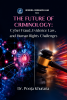
The Future of Criminology: Cyber Fraud, Evidence Law, and Human Rights Challenges
Keywords:
Criminology, Cyber Fraud, Evidence, Law, Human RightsSynopsis
The study of crime has always evolved alongside the development of human civilization. As societies have changed through industrialization, globalization, and technological advancement, the nature of criminal behaviour has transformed in equally profound ways. Today, humanity is experiencing one of the most significant transitions in the history of criminology-the emergence of a digitally connected world where crimes are increasingly committed through computers, mobile devices, artificial intelligence, cloud platforms, cryptocurrencies, and global communication networks.
This transformation has created both remarkable opportunities and complex challenges. Technology has improved communication, commerce, education, healthcare, governance, and financial inclusion, yet it has also provided criminals with sophisticated tools for cyber fraud, identity theft, ransomware attacks, digital espionage, financial manipulation, misinformation, and transnational organized crime.
Throughout this volume, special attention has been given to the relationship between innovation and justice. Artificial intelligence, predictive analytics, digital surveillance, blockchain technology, cloud computing, quantum computing, and virtual environments are rapidly transforming criminal investigations and legal proceedings. These technologies offer powerful opportunities for crime prevention and evidence analysis, but they also raise important questions regarding transparency, accountability, privacy, fairness, discrimination, and due process.
The book also recognizes that cybercrime is fundamentally a global phenomenon. Criminals routinely exploit international communication systems, cross-border financial networks, cloud-based infrastructure, and decentralized digital platforms. Consequently, no country can effectively combat cybercrime in isolation. International cooperation harmonized legal standards, digital evidence-sharing mechanisms, and coordinated law enforcement efforts are indispensable for addressing emerging transnational threats.
One of the distinguishing features of this work is its multidisciplinary perspective. Criminology today extends far beyond the study of offenders and criminal acts. It encompasses the experiences of victims, the psychology of online behaviour, digital forensic science, cybersecurity governance, ethical artificial intelligence, cyber psychology, financial crime prevention, evidence law, and institutional resilience.
The chapters have been organized in a logical progression. The book begins with the evolution of criminology and the emergence of cybercrime, followed by discussions on cyber fraud, digital evidence, artificial intelligence, surveillance, human rights, digital forensics, comparative cyber law, victimology, cyber psychology, and international cooperation. It concludes by examining future developments such as quantum computing, the metaverse, technology-driven justice systems, and policy directions that will shape criminology in the decades ahead.
This book has been prepared for a broad readership, including undergraduate and postgraduate students of criminology, law, cyber law, criminal justice, forensic science, cybersecurity, sociology, public administration, and information technology. It is equally intended to serve researchers, legal practitioners, judges, prosecutors, police officers, forensic experts, cybersecurity professionals, policymakers, and educators who seek a deeper understanding of contemporary criminal justice challenges.
Chapters
-
Chapter 1: Evolution of Criminology in the Digital Era
-
Chapter 2: Cyber Fraud-Emerging Threats and Criminal Innovations
-
Chapter 3: Digital Evidence and the Changing Landscape of Evidence Law
-
Chapter 4: Artificial Intelligence, Digital Surveillance, and Criminal Justice
-
Chapter 5: Human Rights in the Age of Cybercrime
-
Chapter 6: Digital Forensics and Modern Criminal Investigation
-
Chapter 7: Comparative Cyber Laws and International Criminal Cooperation
-
Chapter 8: Victimology, Cyber Psychology, and Crime Prevention
-
Chapter 9: Future Directions in Criminology and Criminal Justice
Downloads
References
Chapter 1: Evolution of Criminology in the Digital Era
1. Castells, M. (2010). The rise of the network society (2nd ed.). Wiley-Blackwell.
2. Holt, T. J., Bossler, A. M., & Seigfried-Spellar, K. C. (2022). Cybercrime and digital forensics: An introduction (3rd ed.). Routledge.
Chapter 2: Cyber Fraud-Emerging Threats and Criminal Innovations
1. Button, M., & Cross, C. (2017). Cyber frauds, scams and their victims. Routledge.
2. Financial Action Task Force. (2020). Virtual assets red flag indicators of money laundering and terrorist financing. FATF.
Chapter 3: Digital Evidence and the Changing Landscape of Evidence Law
1. Casey, E. (2011). Digital evidence and computer crime: Forensic science, computers, and the internet (3rd ed.). Academic Press.
2. Council of Europe. (2001). Convention on Cybercrime, European Treaty Series No. 185.
Chapter 4: Artificial Intelligence, Digital Surveillance, and Criminal Justice
1. Brayne, S. (2021). Predict and surveil: Data, discretion, and the future of policing. Oxford University Press.
2. Lum, K., & Isaac, W. (2016). To predict and serve? Significance, 13(5), 14–19.
Chapter 5: Human Rights in the Age of Cybercrime
1. Office of the United Nations High Commissioner for Human Rights. (2021). The right to privacy in the digital age (A/HRC/48/31). United Nations.
2. Office of the United Nations High Commissioner for Human Rights. (2024). Legal safeguards for personal data protection and privacy in the digital age (A/HRC/55/46). United Nations.
Chapter 6: Digital Forensics and Modern Criminal Investigation
1. Ayers, R., Brothers, S., & Jansen, W. (2014). Guidelines on mobile device forensics (NIST Special Publication 800-101 Revision 1). National Institute of Standards and Technology.
2. Financial Action Task Force. (2021). Updated guidance for a risk-based approach to virtual assets and virtual asset service providers. FATF.
Chapter 7: Comparative Cyber Laws and International Criminal Cooperation
1. Council of Europe. (2001). Convention on Cybercrime, European Treaty Series No. 185.
2. Council of Europe. (2022). Second Additional Protocol to the Convention on Cybercrime on enhanced co-operation and disclosure of electronic evidence.
Chapter 8: Victimology, Cyber Psychology, and Crime Prevention
1. Button, M., Lewis, C., & Tapley, J. (2014). Not a victimless crime: The impact of fraud on individual victims and their families. Security Journal, 27, 36–54.
2. Hinduja, S., & Patchin, J. W. (2015). Bullying beyond the schoolyard: Preventing and responding to cyberbullying (2nd ed.). Corwin.
Chapter 9: Future Directions in Criminology and Criminal Justice
1. INTERPOL. (2022). Metaverse: A law enforcement perspective. INTERPOL Innovation Centre.
2. INTERPOL. (2024). Metacrime: Crime in the metaverse. INTERPOL.
Downloads
Published
License

This work is licensed under a Creative Commons Attribution 4.0 International License.
Creative Commons Attribution 4.0 International (CC BY 4.0) — License Terms
The Creative Commons Attribution 4.0 International License (CC BY 4.0) is one of the most permissive open licenses. It allows others to use, share, and build upon a work for any purpose—including commercial use—provided that proper credit is given to the original creator.
1. Permissions Granted
Under CC BY 4.0, anyone may:
a) Share
Copy and redistribute the material in any medium or format (print, digital, audio, video, etc.).
b) Adapt
Remix, transform, translate, or build upon the material.
c) Commercial Use Allowed
The work may be used for commercial purposes, including resale, inclusion in paid products, or monetized distribution.
d) No Additional Permission Required
Users do not need to contact the author for permission, as long as they follow the license conditions.
2. Attribution Requirements (Core Condition)
Users must give appropriate credit to the original creator. Attribution should include:
- Name of the author/creator
- Title of the work (if available)
- Source (publisher, website, or platform)
- Link to the original work (if online)
- Link to the CC BY 4.0 license
- Indication of any changes made
Example Attribution:
“Title of Work” by Author Name is licensed under CC BY 4.0.
Adapted from the original available at [URL].
3. Indicating Changes
If the material is modified, translated, shortened, or otherwise altered, users must clearly state that changes were made.
Examples:
- “Translated from the original”
- “Adapted from…”
- “Modified version of…”
4. No Additional Restrictions
Users may not:
- Apply legal terms or technological measures (such as DRM) that restrict others from exercising the license rights
- Impose new licensing conditions that contradict CC BY 4.0
5. Rights Not Covered by the License
CC BY 4.0 does not automatically grant:
- Patent rights
- Trademark rights
- Privacy or publicity rights
- Moral rights where they cannot be waived by law
Users must ensure compliance with these separately.
6. Disclaimer of Warranties
The material is provided “as-is.”
The licensor (author/publisher) gives no guarantees regarding accuracy, suitability, or fitness for any purpose.
7. Termination and Reinstatement
- The license remains valid as long as the terms are followed.
- If a user violates the terms (e.g., fails to attribute), the rights terminate automatically.
- Rights may be reinstated if the violation is corrected within 30 days of discovery.
8. International Scope
CC BY 4.0 is designed to work worldwide and is not limited to any specific country’s copyright law.
Suggested Copyright Notice Using CC BY 4.0
© [Year] [Author Name].
This work is licensed under the Creative Commons Attribution 4.0 International License (CC BY 4.0).
To view a copy of this license, visit: https://creativecommons.org/licenses/by/4.0/
You are free to share and adapt this work for any purpose, even commercially, provided that appropriate credit is given.









