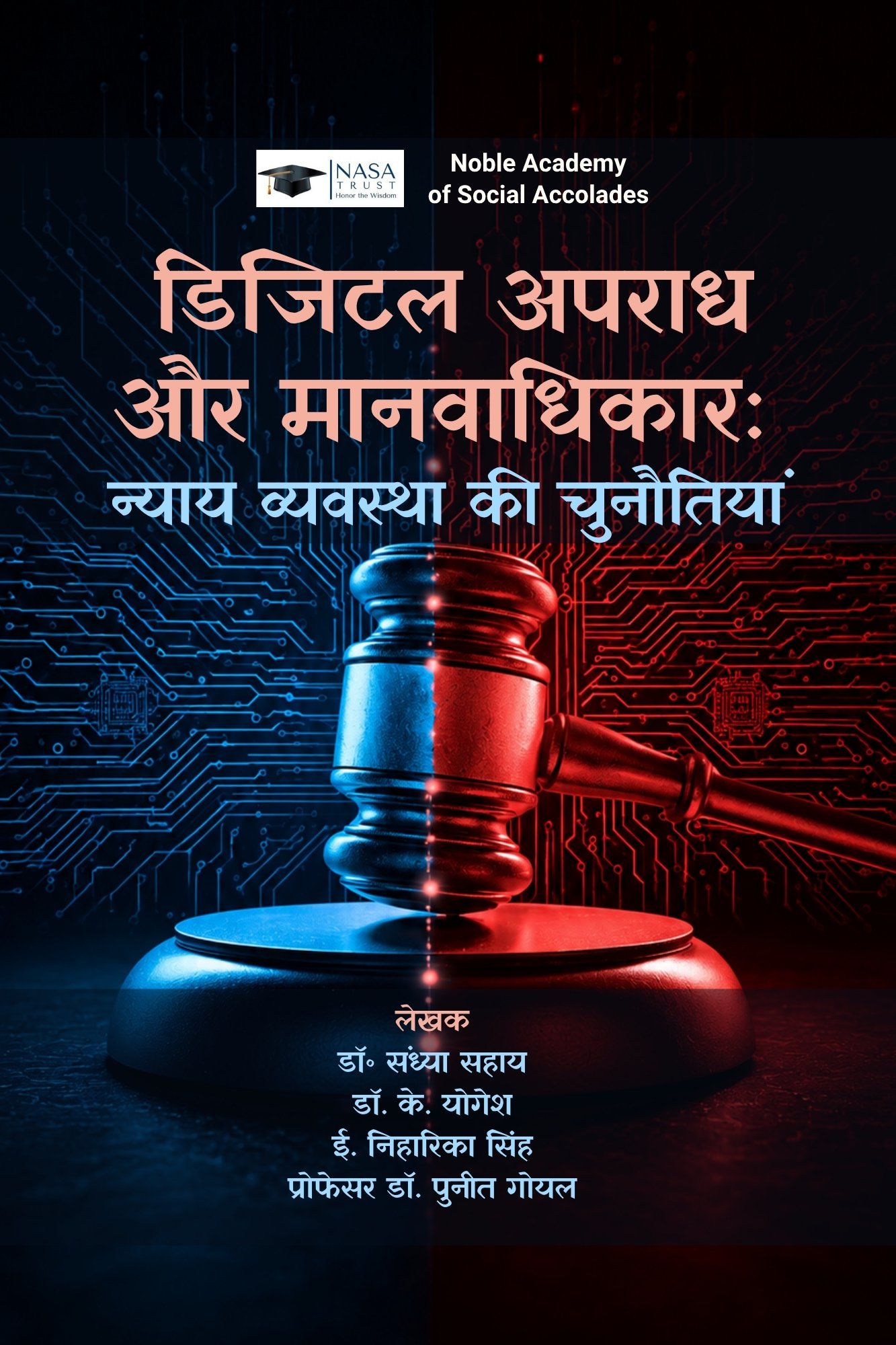
डिजिटल अपराध और मानवाधिकार: न्याय व्यवस्था की चुनौतियां
Keywords:
डिजिटल, अपराध, मानवाधिकार, न्याय, न्याय व्यवस्थाSynopsis
“डिजिटल अपराध और मानवाधिकार: न्याय व्यवस्था की चुनौतियां” समकालीन डिजिटल समाज में उभरती उन जटिल चुनौतियों का विस्तृत अध्ययन प्रस्तुत करती है, जो तकनीकी विकास, साइबर अपराधों की बढ़ती घटनाओं और मानवाधिकार संरक्षण की आवश्यकताओं के बीच उत्पन्न हुई हैं। वर्तमान समय में इंटरनेट, सोशल मीडिया, कृत्रिम बुद्धिमत्ता, क्लाउड कंप्यूटिंग और डिजिटल संचार प्रणालियां मानव जीवन का अभिन्न हिस्सा बन चुकी हैं। इन तकनीकों ने जहां विकास, नवाचार और वैश्विक संपर्क को नई गति प्रदान की है, वहीं दूसरी ओर अपराध के नए स्वरूपों और अधिकार-संबंधी चिंताओं को भी जन्म दिया है।
पुस्तक का प्रारंभ डिजिटल अपराध की अवधारणा, उसके ऐतिहासिक विकास तथा आधुनिक डिजिटल परिवेश में उसके बदलते स्वरूपों की चर्चा से होता है। इसमें यह स्पष्ट किया गया है कि साइबर अपराध अब केवल तकनीकी प्रणाली पर हमला करने तक सीमित नहीं हैं, बल्कि वे आर्थिक, सामाजिक, राजनीतिक और व्यक्तिगत स्तर पर व्यापक प्रभाव उत्पन्न करते हैं। पहचान की चोरी, फिशिंग, ऑनलाइन वित्तीय धोखाधड़ी, साइबर बुलिंग, डेटा चोरी और डिजिटल उत्पीड़न जैसे अपराध आधुनिक समाज के लिए गंभीर चुनौतियां बन चुके हैं।
पुस्तक का एक महत्वपूर्ण भाग मानवाधिकारों और डिजिटल तकनीक के बीच संबंध पर केंद्रित है। इसमें गोपनीयता के अधिकार, अभिव्यक्ति की स्वतंत्रता, सूचना तक पहुंच, डिजिटल समानता तथा व्यक्तिगत गरिमा जैसे विषयों का विश्लेषण किया गया है। साथ ही यह भी बताया गया है कि डिजिटल निगरानी, डेटा दुरुपयोग और एल्गोरिथ्मिक नियंत्रण जैसी प्रक्रियाएं किस प्रकार नागरिक स्वतंत्रताओं को प्रभावित कर सकती हैं। डिजिटल अधिकारों को मानवाधिकारों के विस्तारित स्वरूप के रूप में समझने का प्रयास इस पुस्तक की विशेषता है।
महिलाओं, बच्चों और समाज के कमजोर वर्गों के विरुद्ध होने वाले डिजिटल अपराधों का विश्लेषण पुस्तक को सामाजिक दृष्टि से अत्यंत प्रासंगिक बनाता है। ऑनलाइन उत्पीड़न, साइबर स्टॉकिंग, बाल शोषण, फर्जी पहचान और डिजिटल धोखाधड़ी जैसे विषयों के माध्यम से यह दर्शाया गया है कि तकनीक के दुरुपयोग का प्रभाव समाज के संवेदनशील वर्गों पर अधिक गंभीर हो सकता है।
पुस्तक का अंतिम भाग साइबर न्याय, मानवाधिकार संरक्षण, डिजिटल सुरक्षा, नीति सुधार और भविष्य की संभावनाओं पर केंद्रित है। इसमें कृत्रिम बुद्धिमत्ता, ब्लॉकचेन, क्वांटम कंप्यूटिंग और अन्य उभरती तकनीकों के संदर्भ में भविष्य की चुनौतियों और अवसरों का विश्लेषण किया गया है। यह भाग पाठकों को यह समझने में सहायता करता है कि एक सुरक्षित, पारदर्शी और मानवाधिकार-सम्मत डिजिटल समाज के निर्माण के लिए बहु-आयामी प्रयासों की आवश्यकता है।
यह पुस्तक विधि, अपराधशास्त्र, मानवाधिकार अध्ययन, साइबर सुरक्षा, लोक प्रशासन, सूचना प्रौद्योगिकी तथा सामाजिक विज्ञान के विद्यार्थियों, शोधार्थियों, शिक्षकों, नीति-निर्माताओं और प्रशासनिक अधिकारियों के लिए एक उपयोगी संदर्भ ग्रंथ के रूप में तैयार की गई है। इसका उद्देश्य केवल डिजिटल अपराधों की प्रकृति और प्रभाव को समझाना नहीं है, बल्कि मानवाधिकारों की रक्षा, न्याय तक पहुंच और उत्तरदायी डिजिटल नागरिकता के महत्व को भी स्थापित करना है। यह पुस्तक डिजिटल युग में न्याय, सुरक्षा और मानव गरिमा के बीच संतुलन स्थापित करने की दिशा में एक सार्थक अकादमिक प्रयास है।
Chapters
-
अध्याय 1: डिजिटल अपराध की अवधारणा और विकास
-
अध्याय 2: मानवाधिकार और डिजिटल युग
-
अध्याय 3: साइबर अपराधों के प्रमुख प्रकार और उनका प्रभाव
-
अध्याय 4: डिजिटल अपराध और गोपनीयता के अधिकार का हनन
-
अध्याय 5: महिलाओं, बच्चों और कमजोर वर्गों के विरुद्ध डिजिटल अपराध
-
अध्याय 6: भारतीय न्याय व्यवस्था और साइबर अपराध
-
अध्याय 7: डिजिटल अपराध जांच में तकनीकी और कानूनी चुनौतियां
-
अध्याय 8: मानवाधिकार संरक्षण और साइबर न्याय
-
अध्याय 9: डिजिटल सुरक्षा, नीति सुधार और भविष्य की दिशा
Downloads
References
अध्याय 1: डिजिटल अपराध की अवधारणा और विकास
Brenner, S. W. (2010). Cybercrime: Criminal Threats from Cyberspace. Praeger Publishers.
Wall, D. S. (2007). Cybercrime: The Transformation of Crime in the Information Age. Polity Press.
Yar, M., & Steinmetz, K. F. (2019). Cybercrime and Society (3rd ed.). Sage Publications.
अध्याय 2: मानवाधिकार और डिजिटल युग
United Nations. (1948). Universal Declaration of Human Rights. United Nations.
United Nations Human Rights Council. (2021). The Right to Privacy in the Digital Age. United Nations.
Floridi, L. (2014). The Fourth Revolution: How the Infosphere is Reshaping Human Reality. Oxford University Press.
अध्याय 3: साइबर अपराधों के प्रमुख प्रकार और उनका प्रभाव
Cross, M. (2020). Cybersecurity and Cyberwar: What Everyone Needs to Know. Oxford University Press.
Chhabra, T., & Sharma, A. (2021). Cyber Crime in India: Challenges and Preventive Measures. International Journal of Law Management & Humanities, 4(3), 421–432.
Jaishankar, K. (Ed.). (2011). Cyber Criminology: Exploring Internet Crimes and Criminal Behavior. CRC Press.
अध्याय 4: डिजिटल अपराध और गोपनीयता के अधिकार का हनन
Solove, D. J. (2021). Understanding Privacy. Harvard University Press.
Westin, A. F. (1967). Privacy and Freedom. Atheneum.
Kuner, C. (2007). European Data Protection Law: Corporate Compliance and Regulation. Oxford University Press.
अध्याय 5: महिलाओं, बच्चों और कमजोर वर्गों के विरुद्ध डिजिटल अपराध
United Nations Children's Fund (UNICEF). (2020). Child Online Protection Guidelines.
Hinduja, S., & Patchin, J. W. (2018). Bullying Beyond the Schoolyard: Preventing and Responding to Cyberbullying. Sage Publications.
Powell, A., Henry, N., Flynn, A., & Scott, A. J. (2019). Image-Based Sexual Abuse: A Study on the Causes and Consequences of Non-consensual Nude Image Sharing. Routledge.
अध्याय 6: भारतीय न्याय व्यवस्था और साइबर अपराध
Government of India. (2000). The Information Technology Act, 2000.
Government of India. (2008). Information Technology (Amendment) Act, 2008.
Basu, D. D. (2021). Introduction to the Constitution of India (26th ed.). LexisNexis.
अध्याय 7: डिजिटल अपराध जांच में तकनीकी और कानूनी चुनौतियां
Casey, E. (2011). Digital Evidence and Computer Crime (3rd ed.). Academic Press.
Nelson, B., Phillips, A., & Steuart, C. (2018). Guide to Computer Forensics and Investigations. Cengage Learning.
Maras, M. H. (2015). Computer Forensics: Cybercriminals, Laws and Evidence. Jones & Bartlett Learning.
अध्याय 8: मानवाधिकार संरक्षण और साइबर न्याय
United Nations Office on Drugs and Crime (UNODC). (2013). Comprehensive Study on Cybercrime.
European Union Agency for Fundamental Rights (FRA). (2020). Fundamental Rights and Digital Technologies.
Belli, L. (Ed.). (2017). Internet and Human Rights: Theory and Practice. FGV Direito Rio.
अध्याय 9: डिजिटल सुरक्षा, नीति सुधार और भविष्य की दिशा
World EconSomic Forum. (2024). Global Cybersecurity Outlook 2024.
International Telecommunication Union (ITU). (2023). Global Cybersecurity Index 2023.
Schwab, K. (2017). The Fourth Industrial Revolution. Crown Business.
Published
License

This work is licensed under a Creative Commons Attribution 4.0 International License.
Creative Commons Attribution 4.0 International (CC BY 4.0) — License Terms
The Creative Commons Attribution 4.0 International License (CC BY 4.0) is one of the most permissive open licenses. It allows others to use, share, and build upon a work for any purpose—including commercial use—provided that proper credit is given to the original creator.
1. Permissions Granted
Under CC BY 4.0, anyone may:
a) Share
Copy and redistribute the material in any medium or format (print, digital, audio, video, etc.).
b) Adapt
Remix, transform, translate, or build upon the material.
c) Commercial Use Allowed
The work may be used for commercial purposes, including resale, inclusion in paid products, or monetized distribution.
d) No Additional Permission Required
Users do not need to contact the author for permission, as long as they follow the license conditions.
2. Attribution Requirements (Core Condition)
Users must give appropriate credit to the original creator. Attribution should include:
- Name of the author/creator
- Title of the work (if available)
- Source (publisher, website, or platform)
- Link to the original work (if online)
- Link to the CC BY 4.0 license
- Indication of any changes made
Example Attribution:
“Title of Work” by Author Name is licensed under CC BY 4.0.
Adapted from the original available at [URL].
3. Indicating Changes
If the material is modified, translated, shortened, or otherwise altered, users must clearly state that changes were made.
Examples:
- “Translated from the original”
- “Adapted from…”
- “Modified version of…”
4. No Additional Restrictions
Users may not:
- Apply legal terms or technological measures (such as DRM) that restrict others from exercising the license rights
- Impose new licensing conditions that contradict CC BY 4.0
5. Rights Not Covered by the License
CC BY 4.0 does not automatically grant:
- Patent rights
- Trademark rights
- Privacy or publicity rights
- Moral rights where they cannot be waived by law
Users must ensure compliance with these separately.
6. Disclaimer of Warranties
The material is provided “as-is.”
The licensor (author/publisher) gives no guarantees regarding accuracy, suitability, or fitness for any purpose.
7. Termination and Reinstatement
- The license remains valid as long as the terms are followed.
- If a user violates the terms (e.g., fails to attribute), the rights terminate automatically.
- Rights may be reinstated if the violation is corrected within 30 days of discovery.
8. International Scope
CC BY 4.0 is designed to work worldwide and is not limited to any specific country’s copyright law.
Suggested Copyright Notice Using CC BY 4.0
© [Year] [Author Name].
This work is licensed under the Creative Commons Attribution 4.0 International License (CC BY 4.0).
To view a copy of this license, visit: https://creativecommons.org/licenses/by/4.0/
You are free to share and adapt this work for any purpose, even commercially, provided that appropriate credit is given.