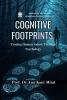
Cognitive Footprints: Tracing Human Nature Through Psychology
Keywords:
Cognitive Processes, Working Memory Model, Executive Function, Artificial Intelligence and Human Cognition, Scopus-Indexed Journal, Academic Psychology Journal, Wissira Press, Wissira Academic Books, Books by WissiraSynopsis
The field of cognitive psychology has long been a cornerstone of understanding human nature, offering profound insights into how we think, learn, remember, and interact with the world. Cognitive Footprints: Tracing Human Nature Through Psychology seeks to illuminate the intricate workings of the human mind through the lens of cognitive processes, examining how mental functions shape our perceptions, decisions, emotions, and social interactions. In this book, we embark on a journey through the foundational theories, current research, and future directions in the realm of cognitive psychology.
The aim of this book is not only to explore the cognitive mechanisms that drive human behaviour but also to understand the way these mechanisms evolve and adapt over time, in response to both internal and external influences. From the intricacies of memory and decision-making to the profound impact of emotions on cognition, we will explore how human cognition is intertwined with our social environment, mental health, and technological advancements.
Each chapter delves into a unique aspect of cognitive psychology, offering readers an in-depth understanding of the key theories and empirical findings in the field. We start with the foundational concepts of cognitive psychology, including memory, learning, and perception, before moving into more complex topics such as decision-making, social cognition, and cognitive dysfunction. Throughout the book, case studies and real-life examples illustrate how these cognitive processes unfold in everyday life, while cutting-edge research highlights the innovations and challenges shaping the future of the field.
One of the defining aspects of this book is its emphasis on the intersection between cognition and other fields, such as neuroscience, mental health, and artificial intelligence. By bridging these areas, we aim to present a comprehensive understanding of how cognition influences and is influenced by various domains, offering readers a multidimensional view of human nature. Additionally, we explore the ways in which technology is reshaping the way we think and learn, with discussions on the implications of the digital age on cognition and future directions in cognitive psychology.
This book is intended for students, researchers, and practitioners in psychology, neuroscience, education, and related fields, as well as anyone interested in understanding the complexities of the human mind. Whether you are looking to deepen your understanding of cognitive psychology or simply curious about how cognition shapes our daily lives, Cognitive Footprints offers a thoughtful and engaging exploration of one of the most fascinating and rapidly evolving areas of scientific inquiry.
We hope this book will inspire readers to reflect on the cognitive processes that guide their own thinking and behaviour, and to appreciate the profound influence cognition has on shaping the human experience.
Chapters
-
Chapter-1 The Foundations of Human Cognition
-
Chapter-2 Memory and Learning: The Cognitive Architecture
-
Chapter-3 Perception: The Lens Through Which We See the World
-
Chapter-4 Decision-Making and Problem-Solving
-
Chapter-5 The Role of Emotion in Cognition
-
Chapter-6 Cognitive Development Across the Lifespan
-
Chapter-7 Social Cognition: Understanding Others and Ourselves
-
Chapter-8 Cognitive Dysfunction and Mental Health
-
Chapter-9 The Future of Cognitive Psychology
Downloads
References
Neisser, U. (1967). Cognitive Psychology. Appleton-Century-Crofts.
Miller, G. A. (1956). The magical number seven, plus or minus two: Some limits on our capacity for processing information. Psychological Review, 63(2), 81-97. https://doi.org/10.1037/h0043158
Baddeley, A. (2000). The episodic buffer: A new component of working memory? Trends in Cognitive Sciences, 4(11), 417-423. https://doi.org/10.1016/S1364-6613(00)01538-2
Atkinson, R. C., & Shiffrin, R. M. (1968). Human memory: A proposed system and its control processes. In K. W. Spence & J. T. Spence (Eds.), The psychology of learning and motivation (Vol. 2, pp. 47-89). Academic Press.
Baddeley, A., & Hitch, G. J. (1974). Working memory. In G. H. Bower (Ed.), The psychology of learning and motivation (Vol. 8, pp. 47-89). Academic Press.
Ebbinghaus, H. (1885). Memory: A Contribution to Experimental Psychology. Dover Publications.
Gibson, J. J. (1979). The Ecological Approach to Visual Perception. Houghton Mifflin.
Gregory, R. L. (1997). Perception as a cognitive process. In D. G. M. Hart & H. T. Rees (Eds.), Perception: An essay on the philosophy of perception (pp. 17-46). Oxford University Press.
Rock, I. (1983). The Logic of Perception. MIT Press.
Kahneman, D., Slovic, P., & Tversky, A. (1982). Judgment under Uncertainty: Heuristics and Biases. Cambridge University Press.
Simon, H. A. (1955). A behavioural model of rational choice. Quarterly Journal of Economics, 69(1), 99-118. https://doi.org/10.2307/1884852
Gigerenzer, G., & Todd, P. M. (1999). Simple Heuristics that Make Us Smart. Oxford University Press.
Lazarus, R. S. (1991). Emotion and Adaptation. Oxford University Press.
Damasio, A. R. (1994). Descartes' Error: Emotion, Reason, and the Human Brain. Grosset/Putnam.
Goleman, D. (1995). Emotional Intelligence: Why It Can Matter More Than IQ. Bantam.
Piaget, J. (1952). The Origins of Intelligence in Children. International Universities Press.
Vygotsky, L. S. (1978). Mind in Society: The Development of Higher Psychological Processes. Harvard University Press.
Erikson, E. H. (1950). Childhood and Society. Norton & Company.
Fiske, S. T., & Taylor, S. E. (2017). Social Cognition: From Brains to Culture (3rd ed.). SAGE Publications.
Heider, F. (1958). The Psychology of Interpersonal Relations. John Wiley & Sons.
Tajfel, H. (1974). Social Identity and Intergroup Relations. Cambridge University Press.
Berrios, G. E. (1996). The History of Mental Symptoms: Descriptive Psychopathology since the Nineteenth Century. Cambridge University Press.
Beck, A. T. (1976). Cognitive Therapy and the Emotional Disorders. International Universities Press.
Kramer, J. H., & Boone, K. B. (2009). Neuropsychological assessment of dementia. Journal of Clinical and Experimental Neuropsychology, 31(5), 429-436. https://doi.org/10.1080/13803390802242077
Raichle, M. E. (2015). The Brain's Default Mode Network. Annual Review of Neuroscience, 38, 433-447. https://doi.org/10.1146/annurev-neuro-071013-014030
Clark, A. (2015). Surfing Uncertainty: Prediction, Action, and the Embodied Mind. Oxford University Press.
Marr, D. (1982). Vision: A Computational Investigation into the Human Representation and Processing of Visual Information. W.H. Freeman.
Downloads
Published
License

This work is licensed under a Creative Commons Attribution 4.0 International License.
Creative Commons Attribution 4.0 International (CC BY 4.0) — License Terms
The Creative Commons Attribution 4.0 International License (CC BY 4.0) is one of the most permissive open licenses. It allows others to use, share, and build upon a work for any purpose—including commercial use—provided that proper credit is given to the original creator.
1. Permissions Granted
Under CC BY 4.0, anyone may:
a) Share
Copy and redistribute the material in any medium or format (print, digital, audio, video, etc.).
b) Adapt
Remix, transform, translate, or build upon the material.
c) Commercial Use Allowed
The work may be used for commercial purposes, including resale, inclusion in paid products, or monetized distribution.
d) No Additional Permission Required
Users do not need to contact the author for permission, as long as they follow the license conditions.
2. Attribution Requirements (Core Condition)
Users must give appropriate credit to the original creator. Attribution should include:
- Name of the author/creator
- Title of the work (if available)
- Source (publisher, website, or platform)
- Link to the original work (if online)
- Link to the CC BY 4.0 license
- Indication of any changes made
Example Attribution:
“Title of Work” by Author Name is licensed under CC BY 4.0.
Adapted from the original available at [URL].
3. Indicating Changes
If the material is modified, translated, shortened, or otherwise altered, users must clearly state that changes were made.
Examples:
- “Translated from the original”
- “Adapted from…”
- “Modified version of…”
4. No Additional Restrictions
Users may not:
- Apply legal terms or technological measures (such as DRM) that restrict others from exercising the license rights
- Impose new licensing conditions that contradict CC BY 4.0
5. Rights Not Covered by the License
CC BY 4.0 does not automatically grant:
- Patent rights
- Trademark rights
- Privacy or publicity rights
- Moral rights where they cannot be waived by law
Users must ensure compliance with these separately.
6. Disclaimer of Warranties
The material is provided “as-is.”
The licensor (author/publisher) gives no guarantees regarding accuracy, suitability, or fitness for any purpose.
7. Termination and Reinstatement
- The license remains valid as long as the terms are followed.
- If a user violates the terms (e.g., fails to attribute), the rights terminate automatically.
- Rights may be reinstated if the violation is corrected within 30 days of discovery.
8. International Scope
CC BY 4.0 is designed to work worldwide and is not limited to any specific country’s copyright law.
Suggested Copyright Notice Using CC BY 4.0
© [Year] [Author Name].
This work is licensed under the Creative Commons Attribution 4.0 International License (CC BY 4.0).
To view a copy of this license, visit: https://creativecommons.org/licenses/by/4.0/
You are free to share and adapt this work for any purpose, even commercially, provided that appropriate credit is given.









