

Chapter-3 Perception: The Lens Through Which We See the World
Synopsis
The Sensory Systems and Perception
Perception begins with the sensory systems-sight, hearing, taste, smell, and touch-which gather raw data from the environment. This sensory information is then processed by the brain, leading to perceptual experiences.
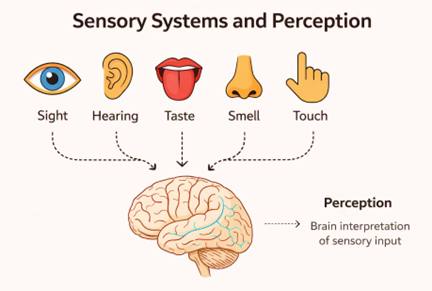
Perception starts with the sensory systems-sight, hearing, taste, smell, and touch-which collect raw information from the external world. These senses act as receptors, picking up stimuli like light, sound waves, chemicals, and pressure, converting them into signals that the brain can process. Once the sensory data is gathered, the brain interprets it to form perceptions, which are our conscious experiences of the world.
However, perception is not just a simple reflection of external stimuli. The brain’s interpretation of sensory input is shaped by various factors such as prior knowledge, experiences, expectations, and attention. For example, two individuals might perceive the same event differently based on their past experiences or cultural backgrounds, highlighting how subjective perception can be.
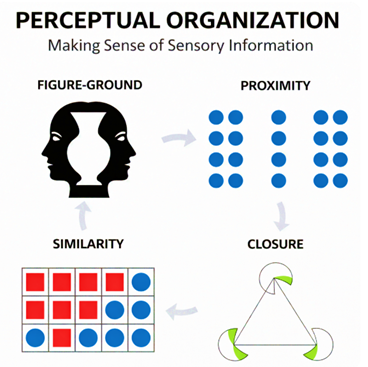
Cognitive psychology examines how these sensory systems work together to create a unified perception of the environment. It also studies how the brain processes sensory data to build our mental representation of reality. Additionally, deficiencies or dysfunctions in the sensory systems can lead to perceptual disorders, where individuals may perceive the world inaccurately. Examples of such disorders include visual or auditory impairments, where the brain struggles to correctly interpret the sensory information it receives.
Published
January 7, 2026
Copyright (c) 2026 Wissira Press
How to Cite
Chapter-3 Perception: The Lens Through Which We See the World . (2026). In Cognitive Footprints: Tracing Human Nature Through Psychology. Wissira Press. https://books.wissira.us/index.php/WIL/catalog/book/54/chapter/415








