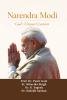
Narendra Modi : God’s Unique Creation
Keywords:
Narendra Modi book, Indian political leadership, Philosophy of leadership, Wissira Research Lab, Wissira Press Academic Books, Books by Wissira, Wissira Press PublicationsSynopsis
Every generation witnesses the rise of individuals whose journeys transcend ordinary boundaries. Their lives become stories of discipline, struggle, conviction, and vision. This book, Narendra Modi: God’s Unique Creation, is not an attempt to mythologize a leader, nor to present perfection without complexity. Instead, it seeks to explore the making of a personality whose rise from modest beginnings to the highest constitutional office in the world’s largest democracy has shaped contemporary India in profound ways.
The title reflects a metaphor. “God’s Unique Creation” does not suggest divinity, but uniqueness-an individuality shaped by circumstance, resilience, belief, and relentless effort. Narendra Modi’s journey represents a narrative of transformation: from grassroots organizational work to state leadership, and ultimately to global statesmanship. His path illustrates how personal discipline, ideological clarity, and strategic governance can converge to influence a nation’s direction.
This book traces multiple dimensions of that journey-political, cultural, diplomatic, economic, and technological. It examines the evolution of leadership during moments of growth as well as crisis, and it reflects on how national identity, global engagement, and institutional reform intersect in shaping modern India. The aim is not merely to recount events, but to understand the philosophy and framework behind them.
In a rapidly changing world, leadership is measured not only by authority, but by the ability to inspire confidence, build systems, and project vision beyond immediate timelines. Through these chapters, the reader is invited to reflect on how one individual’s convictions, choices, and strategies have contributed to India’s contemporary narrative.
This preface serves as an invitation-to read, to analyse, and to engage with the idea of leadership as both responsibility and legacy.
Chapters
-
Chapter-1 From Vadnagar to Vision
-
Chapter-2 The First Sabha – Rohtak’s Prophecy
-
Chapter-3 The Surat Election – The Test of Faith
-
Chapter-4 The Visionary Leadership – Shaping India’s Future
-
Chapter-5 The Path to Transformation – India’s Rise Under Modi
-
Chapter-6 The Architect of a New Bharat
-
Chapter-7 The Guardian in Crisis
-
Chapter-8 The Global Dharma Mission
-
Chapter-9 The Future Avatar – Beyond Politics
Downloads
References
Narendra Modi: A Political Biography – Marino, A. (2014). Narendra Modi: A Political Biography. HarperCollins India.
Narendra Modi: The Man, The Times – Mukhopadhyay, N. (2013). Narendra Modi: The Man, The Times. Westland.
Bharatiya Janata Party – BJP Official Archives and Party Publications.
Press Information Bureau – Government of India press releases and biographical notes.
Election Commission of India – Official election reports and campaign data.
The Indian Express – Coverage of campaign speeches and political rallies (archival reporting).
Hindustan Times – Reports on early campaign mobilization strategies.
Jaffrelot, C. (2015). The Modi-centric BJP 2014 Election Campaign. Studies in Indian Politics.
Election Commission of India – Gujarat and national election data archives.
Modi's India: Hindu Nationalism and the Rise of Ethnic Democracy – Jaffrelot, C. (2021). Princeton University Press.
BBC News – Political coverage on Gujarat and national elections.
The Times of India – Reports on Gujarat political developments.
Digital India – Official Government Portal: digitalindia.gov.in
NITI Aayog – Policy documents and strategy reports.
International Solar Alliance – Official publications.
Ministry of External Affairs – Foreign policy statements and visit records.
Make in India – Official Government Portal: makeinindia.com
Goods and Services Tax Council – GST implementation documents.
World Bank – Ease of Doing Business Reports (India rankings).
Reserve Bank of India – Economic and monetary policy reports.
Ministry of External Affairs – Annexure on international honours and bilateral agreements.
G20 – Leaders’ declarations and presidency documents.
Hindustan Times – Compilation of international awards conferred on PM Modi.
Government of India. (Various years). Bilateral strategic partnership agreements.
Ministry of Health and Family Welfare – COVID-19 response reports.
World Health Organization – COVID-19 situation reports.
Ministry of Defence – Border infrastructure and security updates.
Press Information Bureau – Crisis-related official statements.
United Nations – Resolution on International Day of Yoga (A/RES/69/131).
International Solar Alliance – Founding framework agreement.
Ministry of External Affairs – Vaccine Maitri documentation.
World Bank – Climate and development cooperation reports.
NITI Aayog – Digital economy and AI strategy papers.
G20 – Digital Public Infrastructure framework documents.
Ministry of Electronics and Information Technology – Digital governance reports.
Government of India Economic Survey (Various Years).
Published
License

This work is licensed under a Creative Commons Attribution 4.0 International License.
Creative Commons Attribution 4.0 International (CC BY 4.0) — License Terms
The Creative Commons Attribution 4.0 International License (CC BY 4.0) is one of the most permissive open licenses. It allows others to use, share, and build upon a work for any purpose—including commercial use—provided that proper credit is given to the original creator.
1. Permissions Granted
Under CC BY 4.0, anyone may:
a) Share
Copy and redistribute the material in any medium or format (print, digital, audio, video, etc.).
b) Adapt
Remix, transform, translate, or build upon the material.
c) Commercial Use Allowed
The work may be used for commercial purposes, including resale, inclusion in paid products, or monetized distribution.
d) No Additional Permission Required
Users do not need to contact the author for permission, as long as they follow the license conditions.
2. Attribution Requirements (Core Condition)
Users must give appropriate credit to the original creator. Attribution should include:
- Name of the author/creator
- Title of the work (if available)
- Source (publisher, website, or platform)
- Link to the original work (if online)
- Link to the CC BY 4.0 license
- Indication of any changes made
Example Attribution:
“Title of Work” by Author Name is licensed under CC BY 4.0.
Adapted from the original available at [URL].
3. Indicating Changes
If the material is modified, translated, shortened, or otherwise altered, users must clearly state that changes were made.
Examples:
- “Translated from the original”
- “Adapted from…”
- “Modified version of…”
4. No Additional Restrictions
Users may not:
- Apply legal terms or technological measures (such as DRM) that restrict others from exercising the license rights
- Impose new licensing conditions that contradict CC BY 4.0
5. Rights Not Covered by the License
CC BY 4.0 does not automatically grant:
- Patent rights
- Trademark rights
- Privacy or publicity rights
- Moral rights where they cannot be waived by law
Users must ensure compliance with these separately.
6. Disclaimer of Warranties
The material is provided “as-is.”
The licensor (author/publisher) gives no guarantees regarding accuracy, suitability, or fitness for any purpose.
7. Termination and Reinstatement
- The license remains valid as long as the terms are followed.
- If a user violates the terms (e.g., fails to attribute), the rights terminate automatically.
- Rights may be reinstated if the violation is corrected within 30 days of discovery.
8. International Scope
CC BY 4.0 is designed to work worldwide and is not limited to any specific country’s copyright law.
Suggested Copyright Notice Using CC BY 4.0
© [Year] [Author Name].
This work is licensed under the Creative Commons Attribution 4.0 International License (CC BY 4.0).
To view a copy of this license, visit: https://creativecommons.org/licenses/by/4.0/
You are free to share and adapt this work for any purpose, even commercially, provided that appropriate credit is given.









