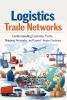
Logistics Trade Networks: Understanding Customs, Ports, Shipping Networks, and Export–Import Systems
Keywords:
Digital logistics systems, Blockchain in shipping, AI in logistics management, Wissira Research Lab, Wissira Press Academic Books, Books by WissiraSynopsis
In today's rapidly evolving world, the shipping industry stands as a cornerstone of global trade and economic exchange. With the exponential growth of international commerce, the demand for efficient, reliable, and sustainable shipping solutions has never been more critical. This book seeks to provide an in-depth exploration of the complexities, innovations, and challenges that define the modern shipping landscape, with a special emphasis on containerization and logistics management.
Shipping, as a mode of transportation, has undergone transformative changes over the past century. From the early days of manual labour-intensive cargo handling to the highly automated and digitized processes we see today, the journey has been nothing short of remarkable. Yet, even as technology advances, many core principles of the industry remain deeply rooted in efficiency, safety, and sustainability.
This book is designed to serve as both a comprehensive guide and a reference for professionals, researchers, and students interested in understanding the intricate workings of the shipping industry. It aims to bridge the gap between theoretical knowledge and practical application, providing a detailed overview of container specifications, shipping methodologies, and the tools used in the global logistics system.
The first section of the book dives into the history and evolution of containerized shipping, explaining the development of various container types, from standard containers to the more specialized ones like reefers and flat racks. A thorough analysis of key industry terms, including Incoterms and their impact on international trade, follows.
Subsequent chapters explore the modern challenges facing the shipping industry, such as sustainability and digital transformation. The push for greener practices, combined with advancements in automation and artificial intelligence, is reshaping the future of logistics, and this book offers insights into how these technologies are being integrated into real-world applications.
We also delve into future trends, such as blockchain technology for enhanced transparency in supply chains, and how shipping companies and port authorities are adapting to the demands of a more connected and sustainable world.
Throughout this journey, readers will encounter case studies, real-world examples, and a rich tapestry of data that highlights the dynamic nature of the industry. It is my hope that this book will not only offer a technical understanding of the subject but also inspire readers to think critically about the future of shipping and logistics.
Whether you're a student looking to understand the fundamentals, a professional in the field seeking a deeper understanding of the nuances, or simply someone fascinated by the intricacies of global trade, this book is for you. Together, we will explore the fascinating world of containerized shipping and logistics, and hopefully, provide the knowledge necessary to navigate the ever-changing waters of this essential industry.
Chapters
-
Chapter-1 Custom House Agent (CHA) and Customs Clearance Operations
-
Chapter-2 Ports, ICDs, and CFS – Infrastructure of International Trade
-
Chapter-3 Shipping Lines and NVOCCs in Global Cargo Movement
-
Chapter-4 Export and Import Documentation in Logistics Operations
-
Chapter-5 Exporters and Importers – Stakeholders in the Supply Chain
-
Chapter-6 Customs Procedures and Compliance in Export-Import Operations
-
Chapter-7 Port Operations and the Role of ICDs in Cargo Movement
-
Chapter-8 Shipping Lines, NVOCCs, and Their Impact on Global Supply Chains
-
Chapter-9 Digital Transformation and the Future of Export-Import Logistics
Downloads
References
World Customs Organization (WCO) – Revised Kyoto Convention: General Annex (standards for customs procedures and clearance agents) - WCO.
R. Chandra & R. Tewari, Customs House Agents in India: Role and Regulation, International Journal of Research in Commerce and Management, Vol. 4, Issue 8.
Government of India, Central Board of Indirect Taxes & Customs (CBIC) – Customs Clearance Procedures.
Rodrigue, J.-P., Notteboom, T. & Slack, B. (2017). The Geography of Transport Systems (5th ed.). Routledge - comprehensive coverage of ports, intermodal terminals, ICDs, and CFS.
Ports' Criticality in International Trade and Global Supply-Chains, Verschuur et al., PLOS ONE - analysis of global port roles.
Translindo Group (2025), Understanding Key Shipping Terms: Port, ICD, CFS and CY - industry explanation of infrastructure services.
United Nations Conference on Trade and Development (UNCTAD). Review of Maritime Transport (annual flagship).
- Standard academic reference for global shipping lines, liner networks, and NVOCC operations.
LaRock, T., Xu, M., & Eliassi-Rad, T. (2021). A Path-based Approach to Analysing the Global Liner Shipping Network, arrive.
Kaplan, D. (2020). Non-Vessel Operating Common Carriers (NVOCCs): Function and Regulation, in Journal of Shipping & Trade.
WTO – Trade Facilitation Agreement (TFA), World Trade Organization - sections on documentation requirements and customs transparency.
CBIC, Government of India - Procedure for Clearance of Imported and Export Goods (Bill of Entry / Shipping Bill documentation).
UN/CEFACT, UN Layout Key for Trade Documents - international standards for export-import documents.
Bowersox, D. J., Closs, D. J., & Cooper, M. B. (2013). Supply Chain Logistics Management. McGraw-Hill - foundational text on supply chain stakeholders.
UNCTAD. World Investment Report - includes role of exporters/importers in global trade flows.
FAO (2021). International Trade and Market Access: A Guide for Exporters and Importers, FAO Trade and Markets Division.
World Customs Organization (WCO) - Arusha Declaration and Revised Kyoto Convention on customs compliance and risk management.
Estevens, R. & Jap, S. (2019). Risk Management in Customs Procedures, Journal of International Trade Law.
WTO, Trade Facilitation Agreement, Articles on risk management and customs compliance.
UNCTAD. Review of Maritime Transport - detailed analysis of port operations and hinterland connectivity.
Talley, W. K. (2009). Port Economics. Routledge - academic overview of port cargo operations.
Martin-Navarro, A., Lechuga Sancho, M. P. & Medina-Garrido, J. A. (2023). Business Process Management Systems in Port Processes: A Systematic Literature Review, arXiv.
UNCTAD. Review of Maritime Transport - global shipping and supply chain integration.
Maritime Port Supply Chain Resilience: A Systematic Review, Redekar et al. (2025).
Stopford, M. (2009). Maritime Economics (3rd Ed.). Routledge - authoritative on how shipping lines and carriers affect global trade.
UN/CEFACT & WCO - Single Window and electronic data interchange (EDI) for international trade.
Digital Twins for Ports, Klar et al. (2023), arXiv - digital innovation in port logistics.
World Bank. Connecting to Compete: Trade Logistics in the Global Economy - benchmarking logistics performance and digital integration.
Published
License

This work is licensed under a Creative Commons Attribution 4.0 International License.
Creative Commons Attribution 4.0 International (CC BY 4.0) — License Terms
The Creative Commons Attribution 4.0 International License (CC BY 4.0) is one of the most permissive open licenses. It allows others to use, share, and build upon a work for any purpose—including commercial use—provided that proper credit is given to the original creator.
1. Permissions Granted
Under CC BY 4.0, anyone may:
a) Share
Copy and redistribute the material in any medium or format (print, digital, audio, video, etc.).
b) Adapt
Remix, transform, translate, or build upon the material.
c) Commercial Use Allowed
The work may be used for commercial purposes, including resale, inclusion in paid products, or monetized distribution.
d) No Additional Permission Required
Users do not need to contact the author for permission, as long as they follow the license conditions.
2. Attribution Requirements (Core Condition)
Users must give appropriate credit to the original creator. Attribution should include:
- Name of the author/creator
- Title of the work (if available)
- Source (publisher, website, or platform)
- Link to the original work (if online)
- Link to the CC BY 4.0 license
- Indication of any changes made
Example Attribution:
“Title of Work” by Author Name is licensed under CC BY 4.0.
Adapted from the original available at [URL].
3. Indicating Changes
If the material is modified, translated, shortened, or otherwise altered, users must clearly state that changes were made.
Examples:
- “Translated from the original”
- “Adapted from…”
- “Modified version of…”
4. No Additional Restrictions
Users may not:
- Apply legal terms or technological measures (such as DRM) that restrict others from exercising the license rights
- Impose new licensing conditions that contradict CC BY 4.0
5. Rights Not Covered by the License
CC BY 4.0 does not automatically grant:
- Patent rights
- Trademark rights
- Privacy or publicity rights
- Moral rights where they cannot be waived by law
Users must ensure compliance with these separately.
6. Disclaimer of Warranties
The material is provided “as-is.”
The licensor (author/publisher) gives no guarantees regarding accuracy, suitability, or fitness for any purpose.
7. Termination and Reinstatement
- The license remains valid as long as the terms are followed.
- If a user violates the terms (e.g., fails to attribute), the rights terminate automatically.
- Rights may be reinstated if the violation is corrected within 30 days of discovery.
8. International Scope
CC BY 4.0 is designed to work worldwide and is not limited to any specific country’s copyright law.
Suggested Copyright Notice Using CC BY 4.0
© [Year] [Author Name].
This work is licensed under the Creative Commons Attribution 4.0 International License (CC BY 4.0).
To view a copy of this license, visit: https://creativecommons.org/licenses/by/4.0/
You are free to share and adapt this work for any purpose, even commercially, provided that appropriate credit is given.









